
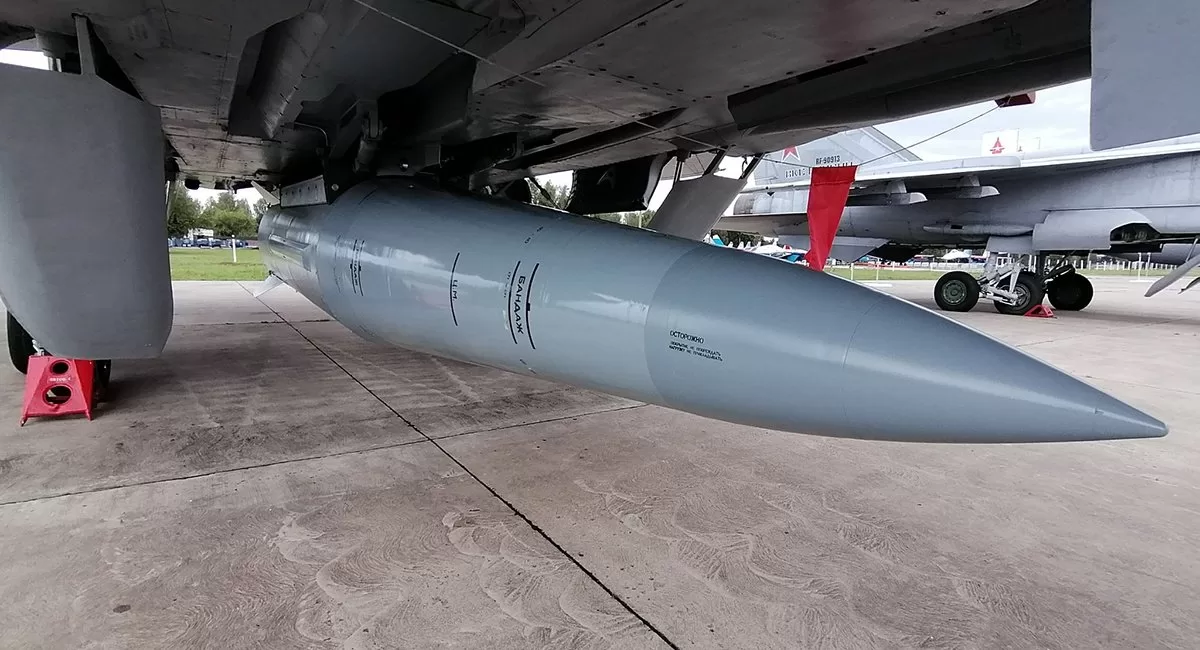
Russia is fulfilling its monthly production plans for the main types of missiles at 110–120% and is unlikely to pause strikes on Ukraine. According to Ukraine’s Defence Intelligence, the intensity of attacks will primarily depend on whether Russia can maintain its current production pace.
This was reported by RBC-Ukraine, citing Deputy Chief of Ukraine’s Defence Intelligence, Major General Vadym Skibitskyi.
In July, Russia used 153 Kh-101, Kalibr and Kh-32 cruise missiles, as well as 198 ballistic and hypersonic missiles. The latter figure was the highest this year.
At the same time, Russia’s defence industry is exceeding its production targets. For the main types of missiles, monthly plan fulfillment currently stands at 110–120%. In particular, in July, the production plan for Kh-101 missiles was fulfilled by 140%, for Kalibr missiles by 111%, and for Kh-35 missiles by 200%.
In addition, as of August 3, Russia had already fulfilled its annual production plan for Zircon missiles and modernized Oniks missiles. Over seven months, Russia produced 33 Zircons and 60 Oniks missiles.
Skibitskyi noted that the Russians may reduce the number of missiles simultaneously directed at a single target, but a pause in strikes is unlikely.
“They will be able to reduce the number of missiles flying at one target, but they are unlikely to take a pause. Right now, they are prioritizing strikes on certain targets, and then they will switch to others. However, everything will primarily depend on the volume of their production — whether they can maintain the current pace,” Skibitskyi said.
Ukraine’s Defence Intelligence also believes that Russia will build up a missile stockpile for the autumn-winter campaign. This is expected to be monitored by comparing the number of missiles produced with the number used.
Skibitskyi also said that in August, Russia’s defence industry plans to produce 11,000 attack drones of various types. Production is being reconfigured with an emphasis on the turbojet-powered Geran-4 and Geran-5.