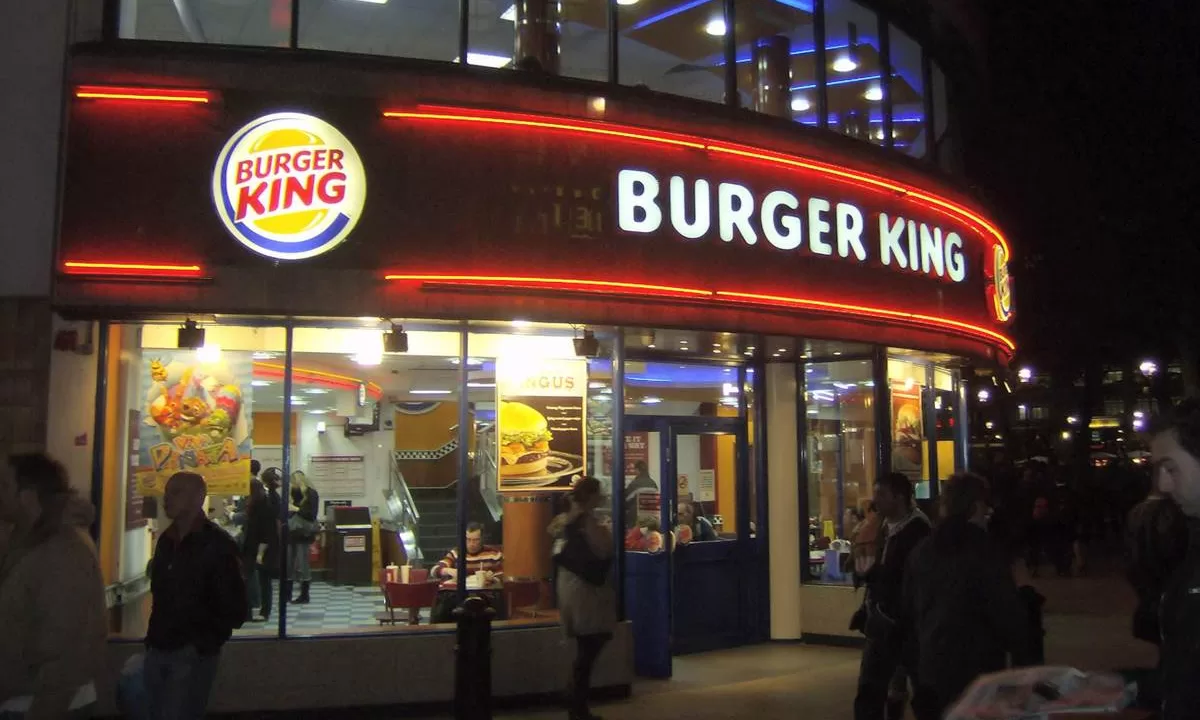
ICU, owned by Makar Pasenyuk and Kostiantyn Stetsenko, bought a large stake in Russia’s Burger King after Crimea and after the war in Donbas began. After February 24, 2022, the investment bankers announced they were exiting the asset. Four and a half years later, there is still no convincing public confirmation that the exit was ever completed.
This was reported by ua.news.
Makar Pasenyuk doesn’t like being called “Poroshenko’s investment banker.” In 2018 he explained to journalists that ICU had many clients, and that with equal justification he could be called the banker of a whole list of Ukrainian businessmen. Formally, that is true. But the nickname didn’t come out of nowhere: Pasenyuk worked with Petro Poroshenko back in the ING days, and later ICU, together with Rothschild, handled the structuring of the Roshen sale and the transfer of the president’s stake into a blind trust.
However, one of ICU’s most curious investments was not in Ukraine, and it smelled nothing like chocolate. In February 2018, Cyprus-based Xomeric Holdings, linked to ICU, bought another 16.62% of Burger King Russia from a structure of Russia’s state-owned VTB. It already held 18.4%, so after the deal its stake rose to 35.02%, making Xomeric the largest single shareholder of Russian Burger King. For the stake, VTB received about 4.6 billion rubles, roughly $80 million at the exchange rate of the time.
The date is especially important here. This is 2018: Crimea had been occupied for four years, war was under way in Donbas, and the Russian-Ukrainian war had long been a fact. In other words, the Ukrainian financiers did not stumble upon a Russian asset in their portfolio by accident after the war began. They significantly increased their investment in a Russian business in the fifth year of the war, and bought the stake from a Russian state bank.
From a financial standpoint, though, the idea looked perfectly rational. Russian Burger King’s 2017 revenue grew 35% to 29.1 billion rubles, net profit rose ninefold to 900 million, the chain was expanding rapidly, and VTB said it had earned about 40% annually on its investment. A professional investor looks at that and sees not only Crimea and Donbas, but also the IRR.
That is the first irony of the story. By 2018, Russian political risk could no longer be considered a “black swan”: for four years the swan had been sitting on the table in front of everyone, flapping its wings and occasionally shooting. But the patty was profitable, so ICU went back for seconds.
And for a while the investment really did look successful. Russian Burger King kept growing and remained a large consumer business with an international brand, hundreds of restaurants and clear prospects for further growth in value. The problem, as tends to happen with Rashka, was described by the traditional saying: “entry is one ruble, exit is two.”
After the full-scale invasion began on February 24, 2022, the presence of international companies in Russia instantly turned into a reputational problem. McDonald’s found the exit fairly quickly. Burger King’s situation was more complicated: the international Restaurant Brands International owned only 15% of the Russian joint venture and explained that it could not unilaterally close the franchise network. The company stopped corporate support for the business, halted new investment and announced its intention to sell its stake.
ICU reacted just as promptly. In March 2022, the company said it had decided to exit Burger King Russia and that the deal was at the “final stage.” The wording made it sound as though the documents were on the table, the car was waiting outside, and all that remained was to sign a couple of papers and hand back the keys.
But the Russian burger turned out to have a remarkable property: it didn’t want to let go of its owners. 2022 passed, then most of 2023, and in October the BBC took another look at the fate of the Russian franchise. It turned out that ICU still owned about 35% of the business.
The group now had a new formulation: it was at the “final stage of the exit.” According to ICU, the terms with the buyer had been agreed, and the company claimed that since the start of the full-scale invasion it had not taken part in management, had not invested money and had not received dividends.
Corporate terminology evolved faster than the deal itself: in March 2022 it was the “final stage,” in October 2023 the “final phase.” The difference between the two states was about nineteen months and the same 35% of shares.
Investment banking has plenty of complex terms: due diligence, closing, escrow, lock-up, earn-out. But a “final stage lasting several years” deserves a term of its own. It could be called, for example, a Burger King exit.
Of course, selling Russian assets after February 24 was hard. Sanctions, currency restrictions, Russian approvals, limits on withdrawing capital and buyers’ desire for the maximum discount turned the exit of many Western companies into a multi-year quest. But that is exactly why ICU’s situation looks especially amusing: this is not a shampoo manufacturer or the owner of a chain of shoe stores, but investment bankers, people who earn their living by understanding ownership structures, political risks, shareholder rights, liquidity and ways of exiting investments.
Moreover, the risk did not appear suddenly in 2022. ICU had eight years of warnings, and it bought the largest addition to its stake in 2018. If Russian returns looked more attractive than Russian risk back then, after 2022 it turned out that risk has an unpleasant feature: you can enter it for money, but getting back out is much harder.
The story could have ended with an ordinary sale, but then it would have been too simple. In September 2025, the parent company Burger King Russia (Cyprus) Ltd left Cyprus and was re-registered in the special administrative region of Kaliningrad Oblast as MKOOO “BKR.” This structure went on to own practically the entire Russian operator of Burger King. And information about the owners of the new Russian holding stopped being public.
The result is an almost literary composition. In 2018 we know exactly who bought the stake: Xomeric, linked to a fund managed by ICU. We know the seller: Russia’s state-owned VTB. We know the size of the stake, 16.62%, the resulting share, 35.02%, even the price, 4.6 billion rubles. In 2022, ICU announces its exit. In autumn 2023 it turns out that it still owns 35%, but is now at the “final phase.” In 2025 the holding moves directly to Russia, after which the names of its owners disappear from public view.
And a similarly clear final announcement, saying who exactly the shares were sold to, when the closing took place, and from what moment ICU finally ceased to be an owner of Russian Burger King, has still not appeared.
The funniest part is that the asset itself felt quite well all this time. While the owners spent years looking for a way out, the local rabble kept buying Whoppers. In 2024, Russian Burger King’s revenue grew by another 21% or so, to more than 90 billion rubles, and net profit exceeded 1.6 billion.
That is, Pasenyuk and Stetsenko didn’t buy a bad business at all. They bought a good asset in a bad country, and made their biggest purchase at a time when the reasons to consider that country problematic were written by “little green men” in Crimea and in blood in Donbas.
For a while it was possible to pretend that political risk existed somewhere separately, and EBITDA separately. Until one day politics walked straight into the Excel spreadsheet.
After that, Russian Burger King became, for ICU, a classic “suitcase without a handle,” burger edition. Before 2022 it was pleasant to hold: an international brand, a fast-growing chain, profit and the prospect of rising capitalization. After February 24 it became indecent to keep and hard to throw away.
So professional financiers, who knew how to structure international deals, work with Roshen and explain investment risks to clients, unexpectedly became the heroes of a fairly simple lesson: some risks are better calculated not after they have already materialized.
Russian Burger King did indeed need to be sold after February 24, 2022. But it would have been even more useful in 2018 to ask: should it be bought at all?