The Court found that procedural safeguards were violated during the businessman’s detention and awarded him compensation.
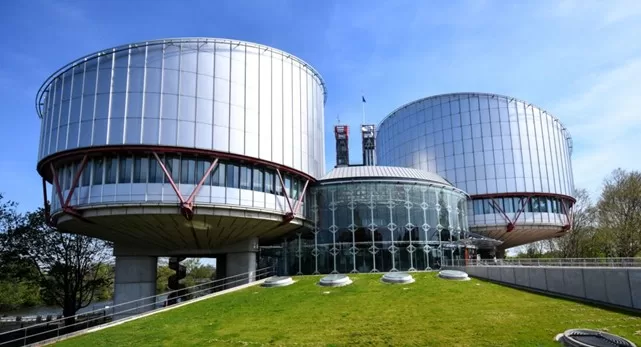
The European Court of Human Rights (ECHR) has ruled that, during the criminal proceedings in the “Trade Commodity” case, Ukrainian law enforcement and judicial authorities violated the rights of businessman Volodymyr Trofymenko guaranteed under Article 5 of the European Convention on Human Rights.
This was reported by Ukrainian News.
The Court concluded that the Ukrainian courts failed to properly examine the applicant’s arguments regarding the unlawfulness of his detention without a court order, despite the fact that he raised this issue both during the hearing on his pre-trial detention and in separate habeas corpus proceedings. The ECHR also found a violation of his right to an enforceable claim for compensation for unlawful deprivation of liberty. As a result, the Court awarded Trofymenko compensation for non-pecuniary damage as well as reimbursement of his legal costs and expenses.
The criminal proceedings against Volodymyr Trofymenko stem from the case involving fuel procurement for Ukraine’s Ministry of Defence through the company “Trade Commodity”. The investigation was launched in 2016, and prosecutors alleged that the businessman had been involved in the possible misappropriation of public funds. Trofymenko has consistently denied any involvement in the alleged offenses.
In October 2017, detectives from Ukraine’s National Anti-Corruption Bureau (NABU) detained the businessman without obtaining a prior court order, relying on legal provisions applicable to serious corruption offenses. Subsequently, Kyiv’s Solomianskyi District Court ruled that the detention had been unlawful, ordered his release from custody, and imposed a personal recognizance measure instead.
In October 2019, the indictment was referred to the High Anti-Corruption Court (HACC). However, following the preliminary hearing, the court returned the indictment to prosecutors to correct procedural deficiencies, delaying the start of the trial until 2020. Despite the passage of several years since then, the case has yet to reach a final judgment.
Human rights advocates have repeatedly criticized the lengthy duration of the proceedings, describing it as evidence of systemic problems within the High Anti-Corruption Court. During the trial, prosecutors also substantially revised their allegations, reducing the amount of the alleged damages by approximately two-thirds.
The ECHR’s judgment marks another significant development in this long-running case, confirming that procedural safeguards guaranteed by the European Convention on Human Rights were violated during both the pre-trial investigation and the judicial review of Trofymenko’s detention.