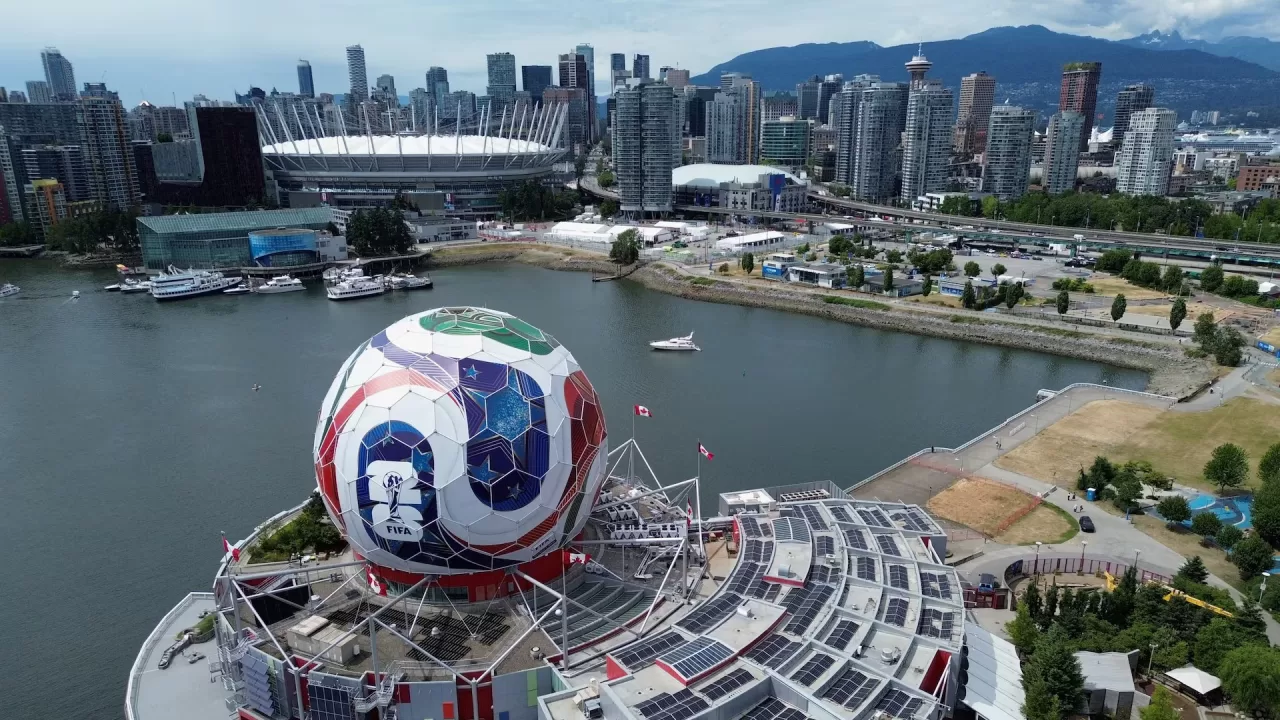
The 2026 FIFA World Cup kicks off today in Mexico City, marking the largest tournament in football history. For the first time, the competition is being hosted by three countries — Mexico, the United States and Canada — while the number of participating teams has increased from 32 to 48. A record 104 matches will be played over the next five weeks, with the final scheduled for July 19 at MetLife Stadium near New York City.
The opening match will feature Mexico against South Africa at the legendary Azteca Stadium. The venue will make history as the first stadium in the world to host matches at three different FIFA World Cups.
However, even before the opening whistle, the tournament has been overshadowed by a series of controversies.
One of the most discussed issues has been problems with U.S. visas. The most notable case involves Somali referee Omar Abdulkadir Artan, who was set to become the first official from Somalia to work at a World Cup. Despite holding a valid U.S. visa and receiving a FIFA appointment, he was denied entry to the United States. FIFA was forced to find a replacement just before the tournament began.
An even more complicated situation has emerged around Iran’s national team. Due to U.S. entry restrictions, some federation officials and members of the official delegation were unable to obtain permission to enter the country. As a result, Iran abandoned plans to base itself in Arizona and moved its training camp to Tijuana, Mexico. The team will travel from there to matches in the United States and return to Mexico afterward.
A separate controversy erupted over Iranian supporters. Several days before the tournament, the Football Federation of Iran claimed that FIFA had canceled the country’s allocated ticket quota. Some fans had already purchased airline tickets and booked hotels but were left without guaranteed access to matches involving their national team.
Ticket prices have also become a major source of criticism. Officially, the cheapest group-stage tickets started at $60, but dynamic pricing meant costs could rise significantly depending on demand. The highest criticism focused on final-match tickets, with some seats priced at $6,730 and secondary-market offers reaching as much as $11,000 for a single ticket. U.S. lawmakers subsequently called on FIFA to review its pricing policy.
Additional controversy followed the cancellation of around 60 tickets that had been issued free of charge because of a technical error. Shortly before the tournament began, FIFA canceled those reservations and asked supporters to purchase the tickets again at full price.
The political dimension of the tournament has also sparked debate. Human rights organizations criticized the United States over restrictions affecting citizens of several countries and raised concerns about fans’ access to matches. Particular attention has focused on visitors from Iran and Haiti.
Organizers have also had to deal with large-scale protests in Mexico City ahead of the opening ceremony. Several groups of demonstrators, including teachers, pensioners and public-sector workers, planned marches toward the Azteca Stadium area. Authorities deployed more than 50,000 police officers to maintain security.
In addition to the expanded tournament format, fans will see several new football rules. For the first time at a World Cup, goalkeepers will be penalized for holding the ball too long. If a goalkeeper exceeds the time limit, the opposing team will be awarded a corner kick. The powers of VAR have also been expanded, allowing video officials to intervene in cases involving mistaken cautions, second yellow cards and incidents leading up to goals. Players and coaches who leave the field in protest of refereeing decisions will also face stricter punishment.
Despite all the controversies, FIFA expects record television audiences and more than six million tickets sold. The tournament is already being described as the biggest World Cup in football history, although its opening has demonstrated that organizational and political challenges may be just as significant as the sporting ones.