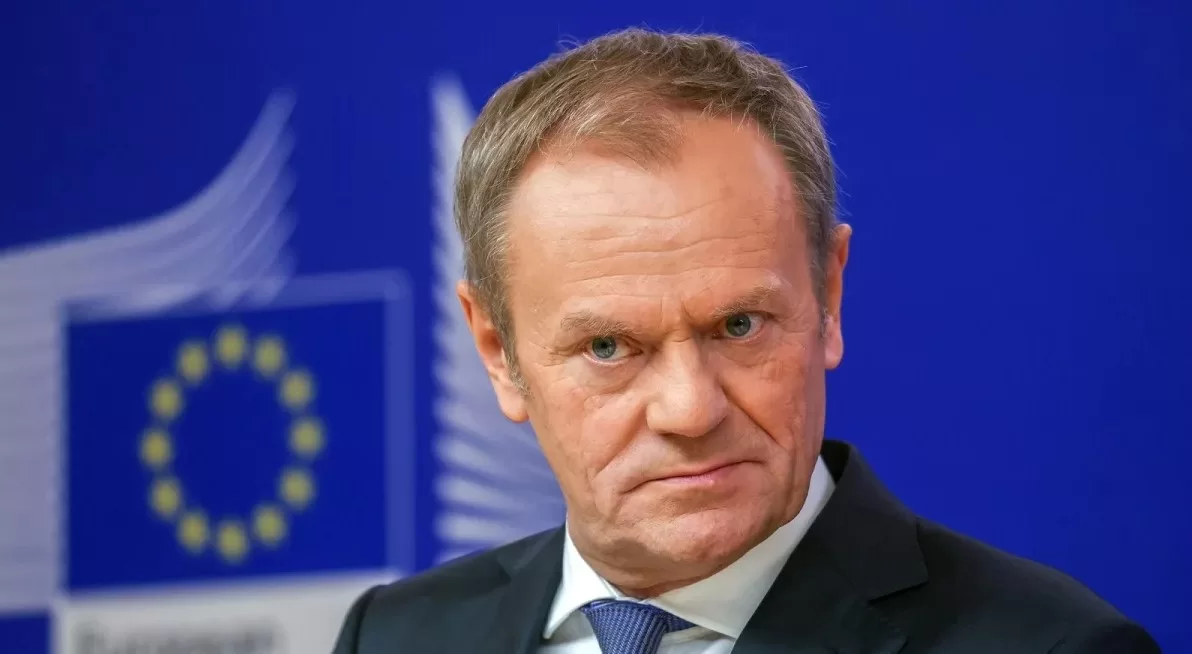
Polish Prime Minister Donald Tusk said there are real grounds for hoping that Russia’s war against Ukraine could end in a relatively short time. He made the remarks while summarizing talks between Ukrainian President Volodymyr Zelensky and U.S. President Donald Trump, as well as a video conference of EU leaders and the NATO secretary general, RMF24 reported.
According to Tusk, the high-level talks involved leaders of key European countries, Canadian Prime Minister Mark Carney, heads of European institutions, and NATO Secretary General Mark Rutte. He described these contacts as the first stage of “very serious negotiations” involving Ukraine, Europe, the United States, and Canada.
Tusk stressed that the basis for optimism is a U.S. declaration of readiness to participate in security guarantees for Ukraine after a possible peace agreement. This could include the presence of U.S. troops, for example along the border or the line of contact between Ukraine and Russia. He noted that such clear statements from the United States had appeared for the first time.
At the same time, the Polish prime minister said that a peace process would require Ukraine to take a compromise approach on territorial issues. He said President Volodymyr Zelensky is showing “very good will,” while emphasizing that any territorial decisions would have to be approved by Ukrainian society, including through a referendum, and would only be possible with genuine and reliable security guarantees.
Tusk also said he had received information from the office of Polish President Karol Nawrocki on the course of the video conference involving U.S., Ukrainian, and European leaders. He added that he expects an urgent meeting with the president to coordinate actions on international security.
According to Tusk, Poland may as early as January face the need to take important decisions regarding Ukraine’s future and regional security, which would require full coordination among all state institutions. He emphasized that he is ready for full cooperation regardless of political differences.