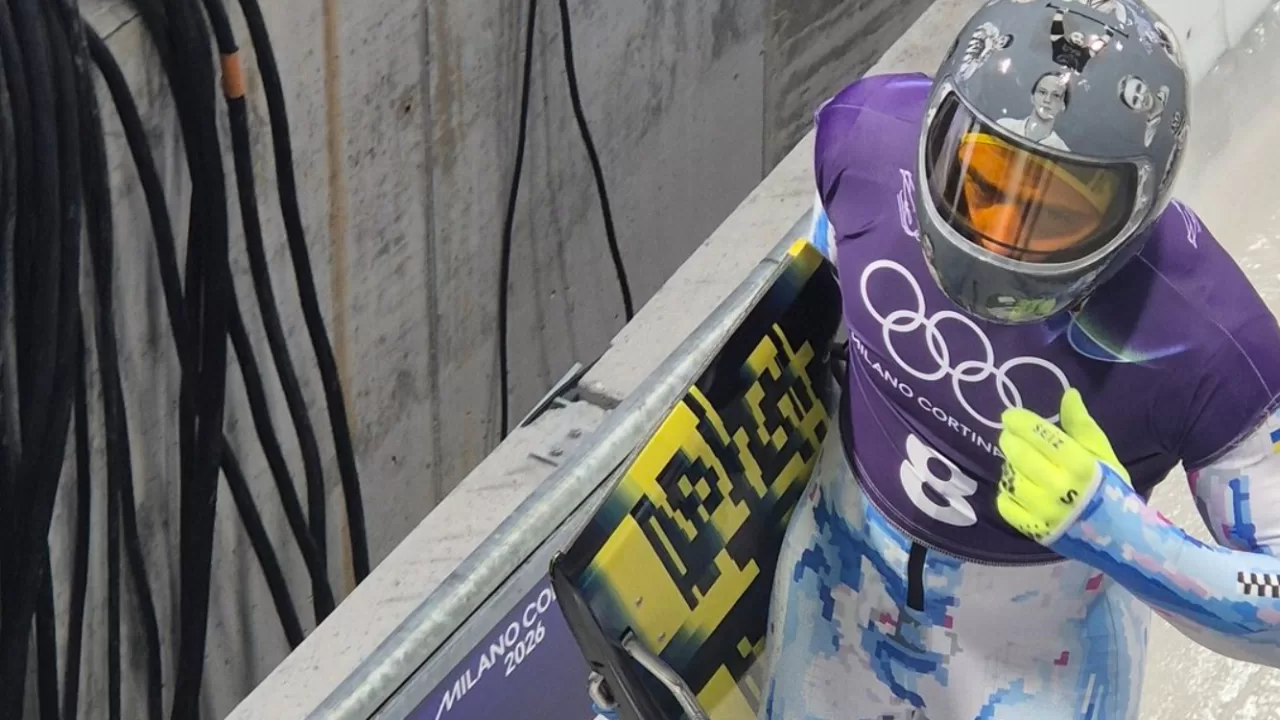
Ukrainian skeleton racer Vladyslav Heraskevych was disqualified before the first race of the 2026 Olympics in skeleton for using a “memory helmet.” The decision was made for an alleged violation of Rule 50 of the Olympic Charter regarding the expression of opinion by athletes.
This was reported by Suspilne Sport.
The athlete received the IBSF’s decision on his disqualification.
“The skeleton competition jury at the Olympic Games has made a decision in the case of Vladislav Heraskevich regarding the violation of Olympic rules on the expression of athletes’ positions. According to the IOC rules, wearing a helmet violates Article 50: it allegedly violates some political appeals. Vladislav Heraskevich has been removed from the start list,” the statement said.
In recent years, Vladislav Heraskevich has been one of the leading representatives of Ukrainian sport, drawing attention to Russia’s full-scale invasion. He has repeatedly expressed his position on the admission of Russian and Belarusian athletes to international competitions, appealing to international sports organizations.
At the previous Olympic Games in Beijing, the skeleton racer staged a silent protest after the race, holding a sign that read “No war in Ukraine.” Despite a possible violation of Rule 50 of the Olympic Charter, the IOC said at the time that it heard his action as a “call for peace,” and the athlete avoided disqualification.
Four years later, another initiative — honoring the memory of deceased Ukrainian athletes with a special helmet bearing images of athletes killed by Russia — met with the opposite reaction. The IOC prepared a ban on the use of this helmet due to the same Rule 50, which created the risk of disciplinary sanctions and possible disqualification.
Other Ukrainian athletes faced similar restrictions: freestyle skier Kateryna Kotsar’s helmet and short track speed skater Oleg Gandey’s equipment were also banned by international organizations.
Despite the ban, Heraskevych twice appeared at training sessions wearing the “memorial helmet” after it was announced.
At the same time, the IOC offered compromises — wearing a black armband or displaying the helmet outside the competition track, while maintaining the ban on its use during races. After the last meeting, the parties remained firm in their positions, and Heraskevych’s response to the proposal was short: “In short, no.”