
A new powerful solar flare has been recorded on the Sun. On November 10 at 09:19 UTC (11:19 Kyiv time), active region 4274 released a flare of the highest power level — class X1.2. The event was reported by the NOAA Space Weather Prediction Center.
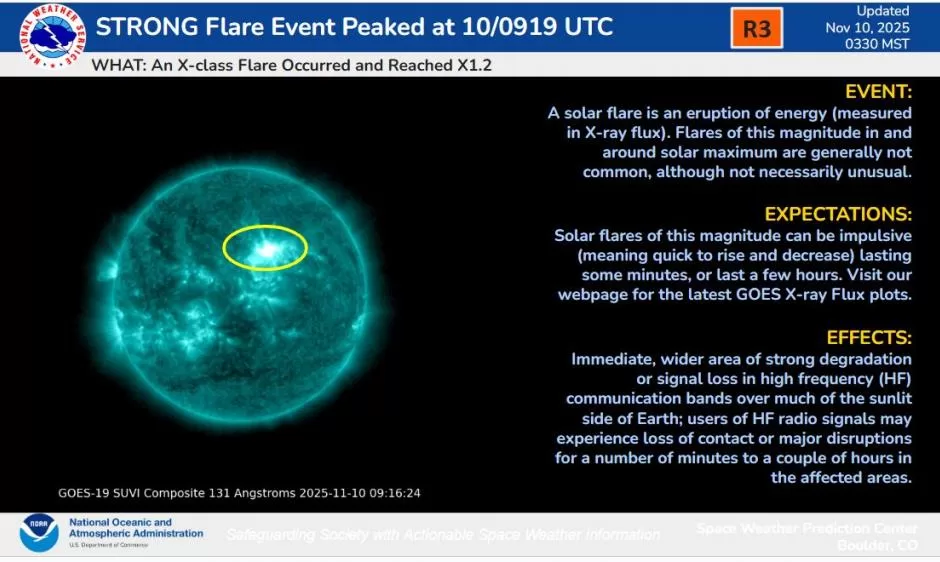
This is the second major flare from the same region within a day — the previous one, of class X1.7, occurred just 26 hours earlier. According to scientists, the flare was accompanied by radio emissions that could cause brief disruptions in radio communications on Earth.
NOAA noted that region 4274 continues to exhibit a complex magnetic structure, meaning additional strong flares are possible within the next 24–48 hours.
Experts also explain that powerful solar flares can affect not only technology but also human well-being. About 1–3 days after such events, streams of charged particles reach Earth, triggering geomagnetic storms. During this time, some people may experience headaches, fatigue, fluctuations in blood pressure, or sleep disturbances. Doctors advise getting more rest, staying hydrated, and avoiding stress during periods of high solar activity.