
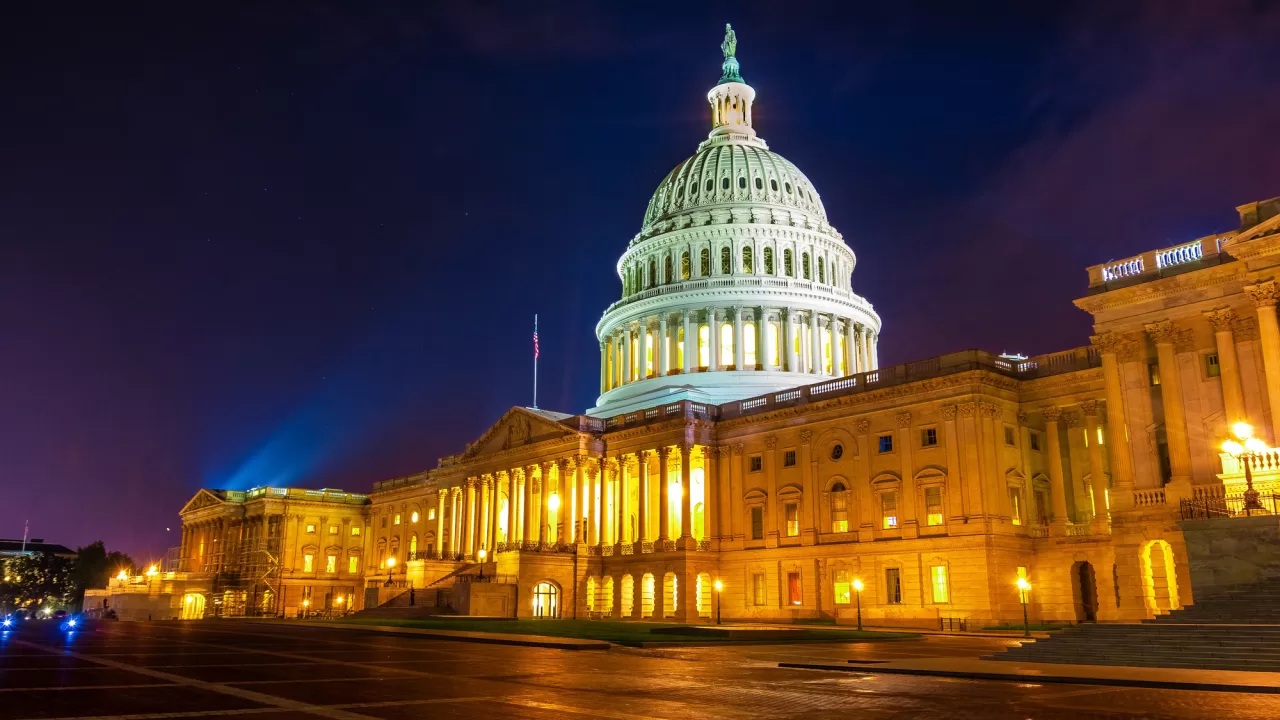
The U.S. House of Representatives on Tuesday evening cleared the final procedural hurdle on the way to approving Lindsey Graham’s bill on sanctions against Russia and Iran. Lawmakers voted to bring the measure to the floor, with a final vote scheduled for Wednesday.
This was reported by Voice of America.
The U.S. Senate approved the bill in August with bipartisan support. The House of Representatives must now make the final decision.
Why the bill has sparked controversy
In the House, the measure has faced opposition from Democrats who object to an amendment that would give the U.S. president new authority to impose tariffs of up to 100% on the largest buyers of Russian oil.
Their main concern is that they do not want to give Donald Trump even broader powers over tariff policy.
Last week, three influential Democrats — Gregory Meeks, Richard Neal and Don Beyer — said they support Ukraine but believe Lindsey Graham’s bill, in its current form, could do more harm than good.
“House Democrats are ironclad in our support for Ukraine, but Lindsey Graham’s Russia and Iran sanctions bill would do more harm than good,” their statement said.
On Monday, Meeks and Steny Hoyer proposed their own amendments to the legislation. Both lawmakers have been consistent supporters of Ukraine.
However, the Republican-controlled House Rules Committee rejected those changes and moved the bill forward for a procedural vote in the House.
According to Axios, not all Democrats agree with the party leadership’s position, leaving some lawmakers facing a difficult choice ahead of the final vote.
Republicans urge support for sanctions
On Tuesday, former House Foreign Affairs Committee chairman and Republican Congressman Michael McCaul urged Democrats to overcome partisan divisions and support the bill.
In his view, the sanctions should help increase pressure on Moscow and contribute to ending Russia’s war against Ukraine.
“When we look back at this moment, I want all of us to be able to say that we did everything we could to end this war. That we understood the threat. That we had the courage to do the right thing — cripple Russia’s war machine and turn the situation toward peace,” McCaul said.
What the bill provides for
Lindsey Graham’s bill would expand sanctions against Russian political leaders, state and financial institutions, major banks, state-owned energy companies and the “shadow fleet.”
A separate section of the bill targets countries that continue to buy Russian oil and natural gas.
The legislation would allow additional tariffs to be imposed on such countries. In the case of the largest buyers of Russian oil, the rates could reach 100%.
This provision has become the main point of contention in the House of Representatives.
Why this week’s vote matters
If the House does not approve the Russia and Iran sanctions bill this week, the next opportunity to return to it will come only after the November midterm elections.
In early September, the Republican leadership, which controls the House, decided to shorten the session so that lawmakers could focus on their election campaigns.
This means the current vote could be the last chance to pass the bill before the election recess.
Diplomats and experts urge lawmakers not to delay
On Monday, 30 American diplomats, experts and former officials published an open letter on the National Interest platform urging lawmakers to support the sanctions bill.
The signatories include former U.S. ambassadors to Ukraine Steven Pifer, William Taylor, John Herbst, Geoffrey Pyatt and Marie Yovanovitch.
In their view, the war in Ukraine has entered a critically important phase.
The authors of the letter say Ukrainian forces have managed to hold back the Russian offensive across a significant part of the front and strengthened their ability to inflict substantial losses on the enemy.
At the same time, Russia has increased the production and use of ballistic missiles and jet-powered drones and intensified attacks on Ukrainian cities.
They also identify Ukraine’s shortage of Patriot interceptors as a separate problem.
Main focus is on Russia’s energy revenues
Supporters of the bill believe that additional pressure on the sources financing the war could bring closer the moment when Vladimir Putin concludes that continuing hostilities is more costly than seriously engaging in negotiations to end them.
The signatories of the open letter say the bill’s main advantage is that it would significantly expand the economic tools available to the United States against Russia and the international networks supporting its war effort.
In their view, the central weakness of the current sanctions regime is that Russia continues to earn substantial revenues from energy exports.
“Sanctioning Russian banks and companies alone cannot fully constrain the Kremlin’s war economy if major foreign customers continue buying Russian oil and gas without significant consequences,” the letter says.
According to the authors, Lindsey Graham’s bill is designed to address this weakness.
“Its tariff provisions would give the United States additional leverage over major buyers of Russian energy products… while preserving waiver authority, congressional oversight and periodic reassessment,” the signatories stressed.
Why delays could weaken the effect of sanctions
American diplomats and experts also warn that prolonged delays in the vote reduce the bill’s effectiveness as a tool of pressure.
In their view, every delay gives Moscow more time to adapt to existing sanctions, replenish its forces and continue attacks.
At the same time, the authors of the letter emphasize that sanctions alone cannot replace Ukraine’s effectiveness on the battlefield, sustained military assistance or diplomacy.
“It is intended to strengthen all three by increasing economic pressure that supports diplomatic efforts,” the appeal says.
The final vote in the House of Representatives is scheduled for Wednesday. If the measure is approved, the bill on new sanctions against Russia and Iran will clear a key stage in the U.S. Congress.