
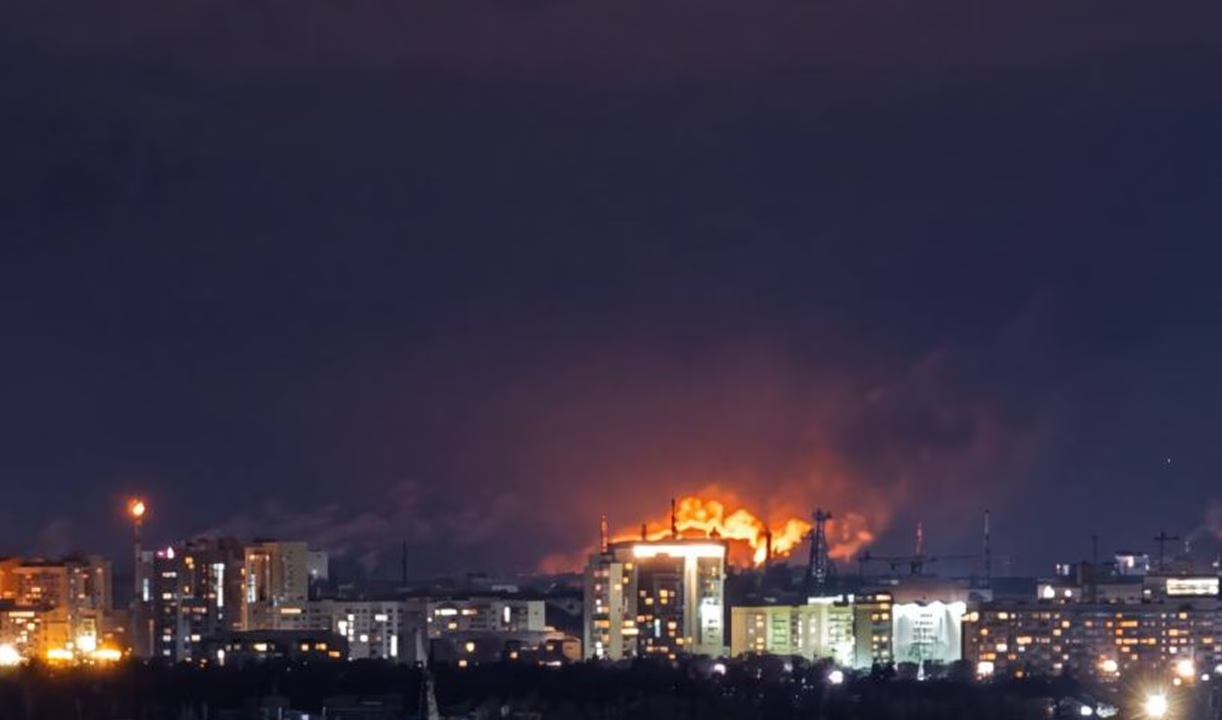
Between October 30 and November 11, Ukraine’s Defense Forces attacked at least nine Russian oil refineries. Among them were all five of Russia’s largest refineries: Omsk, Kirishi, Ryazan, Nizhny Novgorod and Yaroslavl.
This was reported by the General Staff of the Armed Forces of Ukraine.
According to the General Staff, the Novokuibyshevsk and Saratov oil refineries were also targeted.
Fire Point said the combined nominal capacity of at least nine of the attacked facilities exceeds 120 million tonnes of oil per year. This accounts for more than a third of Russia’s total refining capacity.
Omsk refinery attacked for the third time
On November 11, Deep Strike units of Ukraine’s Special Operations Forces struck the Omsk refinery for the third time.
According to the Special Operations Forces, Ukrainian drones traveled nearly 3,000 km to reach the target. The refinery itself is located about 2,500 km from the Ukrainian border.
The Omsk refinery is Russia’s largest oil refinery and is part of Gazprom Neft. Its capacity exceeds 21 million tonnes of oil per year.
The facility produces gasoline, diesel and aviation fuel, as well as petrochemical products.
Ukraine’s Special Operations Forces first attacked the Omsk refinery on July 6. According to the SOF, the facility completely halted oil refining after that strike and was taken offline for repairs. The second attack took place on October 8.
Damage to the Kirishi and Saratov refineries
The General Staff also reported confirmed results of strikes on the Kirishi and Saratov refineries.
On the night of November 9, the Kirishinefteorgsintez facility in Russia’s Leningrad region was hit.
Its installed capacity is around 20 million tonnes of oil per year, accounting for more than 6% of Russia’s total oil refining.
According to the General Staff, the attack damaged an atmospheric crude oil distillation unit, an ELOU primary oil processing unit and two cooling units.
On November 7, Ukraine’s Defense Forces struck the Saratov refinery, which has a capacity of around 7 million tonnes of oil per year.
The attack damaged the refinery’s only AVT-6 primary crude processing unit, two fuel hydrotreatment units, pipelines and a 10,000-cubic-meter storage tank where a fire broke out.
According to the General Staff, operations at the Saratov refinery were halted.
The General Staff stressed that strikes on primary refining units reduce fuel production for the Russian military and cut revenues that Russia uses to finance the war.