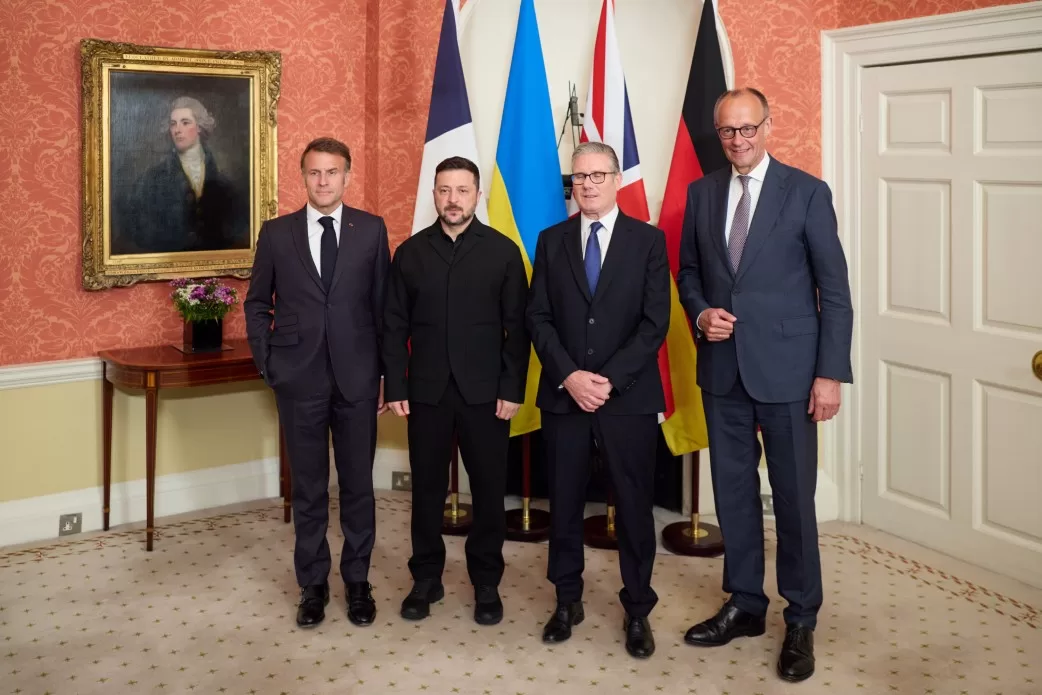
The leaders of the United Kingdom, France and Germany met with Volodymyr Zelenskyy and reaffirmed their unwavering support for Ukraine. Following the talks, the parties outlined five key conditions for achieving a just and lasting peace.
UK Prime Minister Keir Starmer, French President Emmanuel Macron and German Chancellor Friedrich Merz met with Ukrainian President Volodymyr Zelenskyy on June 7. The parties discussed continued support for Ukraine, coordination with allies and the next steps toward a just and lasting peace.
The leaders reaffirmed their unwavering support for Ukraine in defending itself against Russia’s invasion and stressed that all efforts to end the war must be carried out in close coordination with Ukraine, European partners and the United States.
The participants welcomed recent Ukrainian battlefield successes, including the liberation of territory and the use of drone technology. They also condemned Russia’s large-scale missile and drone attacks on Ukrainian cities, including the repeated use of Oreshnik missiles, as well as Russian drone incursions into NATO airspace.
The parties also discussed coordination of support for Ukraine ahead of the G7 summit in Evian, the next meeting of the Coalition of the Willing and the NATO summit in Ankara. The leaders called for increased pressure on Russia’s war economy, greater military assistance to Ukraine and expanded production of interceptor missiles and missile defence capabilities.
During the talks, the leaders outlined five key principles for a potential peace settlement. The first is an immediate and complete ceasefire. The second is that negotiations should begin from the current line of contact while upholding the principle that internationally recognized borders cannot be changed by force and that Ukraine has the sovereign right to choose its own security arrangements and alliances.
The third principle is the provision of robust and legally binding security guarantees for Ukraine once a ceasefire takes effect, including the deployment of the Multinational Force – Ukraine. The fourth is that Russian assets should remain immobilized until Russia ends its aggression and compensates Ukraine for the damage caused by the war. The fifth is that European security interests must be protected in any future agreement.
The leaders also supported Volodymyr Zelenskyy’s call to end the war through diplomatic means, as outlined in his letter to the President of the Russian Federation on June 4, 2026. They backed the proposal for direct dialogue between Ukraine and Russia with active participation from the United States and European partners and reaffirmed their commitment to continue standing firmly with Ukraine.