
Russia showcased a new cruise missile called the “Geran-5” during its so-called “virtual parade” marking May 9 celebrations. The weapon was demonstrated together with a launch system used for the missile, Defense Express reports.
The footage was likely filmed at a launch site in Russia’s Oryol region. The video also shows launches of the “Geran-5”. Earlier reports also suggested the missile could be launched from Su-25 attack aircraft.
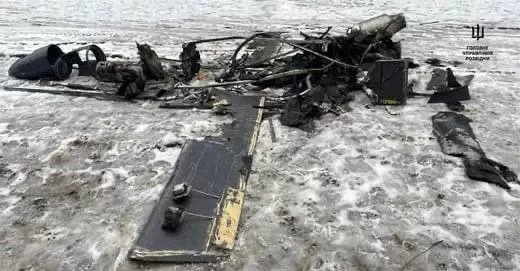
Although this was the first official public presentation of the weapon, Russian forces have already reportedly used the “Geran-5” in strikes against Ukraine. Ukraine’s military intelligence agency previously published photos of missile debris visually matching the model shown during the Russian “parade”.
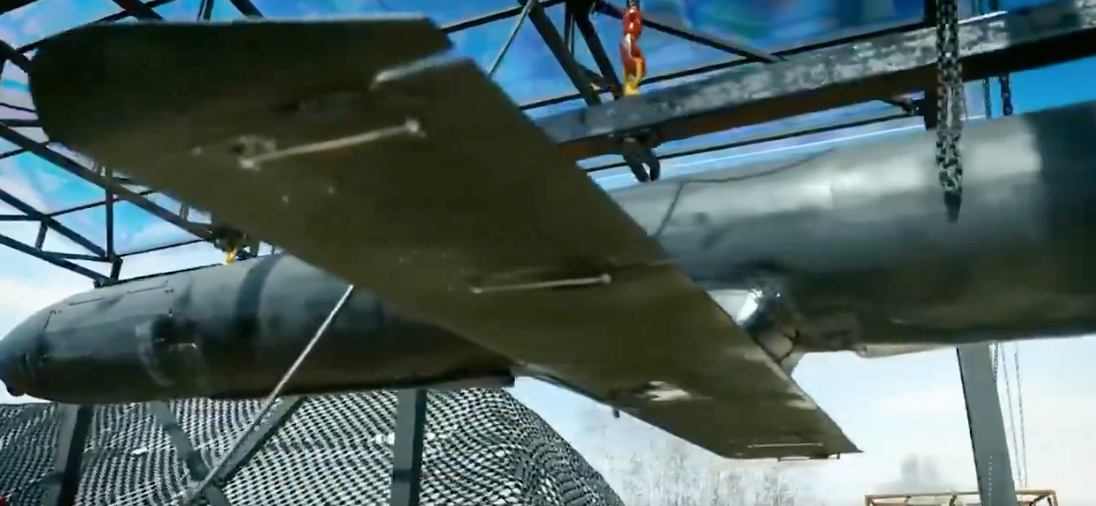
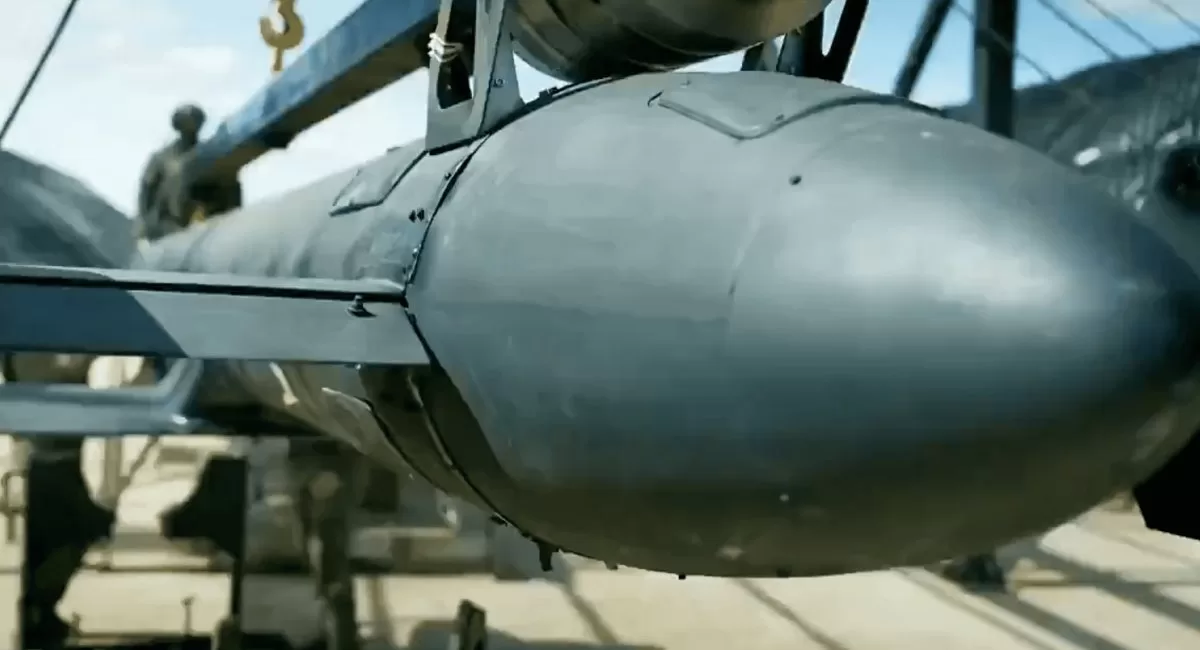
Online, the new Russian missile has already been compared to Ukraine’s FP-5 “Flamingo” and Germany’s V-1 flying bomb. Formally, the “Geran-5” is considered part of a new class of “low-cost cruise missiles” that is actively developing worldwide.
According to available information, the missile carries a warhead weighing around 90 kilograms and has a range of up to 1,000 kilometers. In comparison, Ukraine’s FP-5 “Flamingo” reportedly carries a much heavier warhead of up to one ton.
Reports suggest Russian engineers may have based the “Geran-5” on the Iranian Karrar drone design. The Karrar itself is also said to resemble the American MQM-107 Streaker target drone.
One of the missile’s notable features is the ability to carry an R-73 air-to-air missile. Similar concepts had previously been tested on the “Geran-2”, while Russia has reportedly already started production of a version equipped with the R-60 missile.
Thanks to its jet engine, the “Geran-5” can reportedly reach speeds of up to around 600 km/h. Analysts note that large-scale production of such missiles could create an additional challenge for air defense systems.
The report also states that the “Geran-5” was built using Chinese-made components as well as parts manufactured in Western countries, including the United States and Germany. The missile reportedly uses the “Kometa” navigation system.