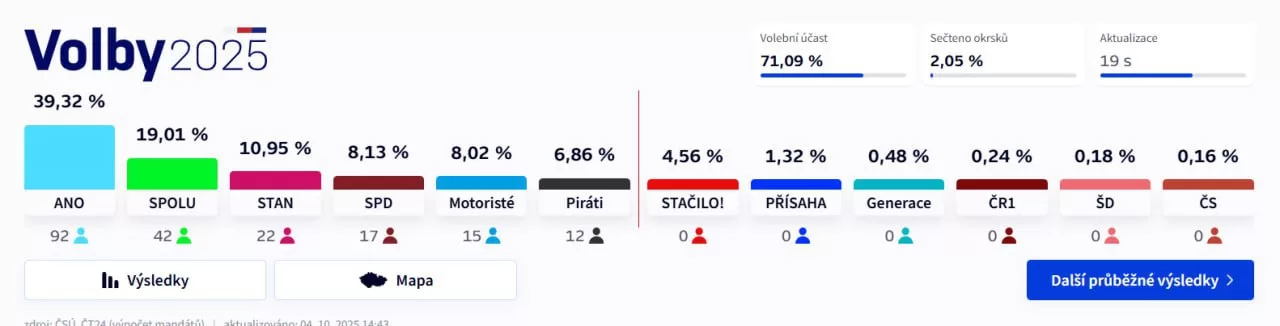
The second day of voting in the parliamentary elections in the Czech Republic has concluded. Polling stations closed at 3 p.m. Kyiv time, and the counting of votes has begun. Andrej Babiš’s opposition ANO movement, which plans to cut aid to Ukraine, is currently gaining almost 40% of the vote, according to the results of 2% of the votes counted.
This was reported by Czech Television.
Petr Fiala’s ruling SPOLU coalition has currently gained 19% of the vote, while the centrist STAN party has gained 10.95%.
As previously reported by RFI, Czech citizens voted for parliament on October 3-4. A total of 4,462 candidates ran for 200 seats in the Chamber of Deputies.
According to the ČTK agency, voter turnout in this year’s parliamentary elections exceeded 50%, and in some constituencies, it exceeded 60%. In the last elections four years ago, 65.4% of voters came to the polls.
Leader of the parliamentary race in the Czech Republic
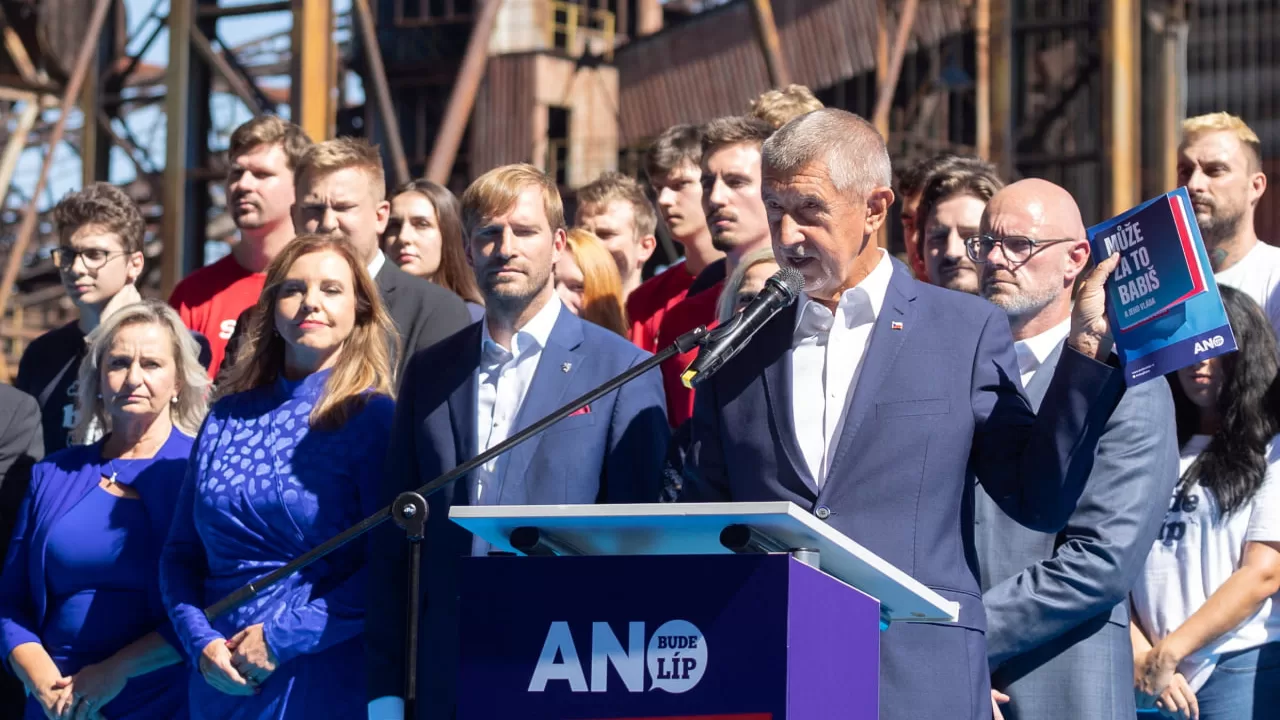
The populist ANO party of former Prime Minister and oligarch Andrej Babiš is seeking to return to power, ahead of the center-right coalition of current Prime Minister Petr Fiala. If he wins, even without a majority, Babiš will be able to form a coalition with Tomio Okamura’s far-right SPD party, which polls have given around 11-13% of the vote. But earlier, President Petr Pavel told the press that negotiations on forming a coalition after the parliamentary elections are likely to be difficult.
The pro-European government has little chance of re-election and will most likely be defeated by Andrej Babiš’s ANO party. The sovereignist billionaire could return to lead the country four years after being removed from office. This is a nightmare scenario for his opponents, who accuse Babiš of wanting to follow in the footsteps of Viktor Orbán’s Hungary,” reports journalist Daniel Vallot.
As reported by RFI journalists, Babiš’s victory could push the Czech Republic into a conditional “alliance” of states that are skeptical about Ukraine and, above all, military aid to Kyiv. Among them are Hungary and Slovakia.
“But we should also not forget the position of President Petr Pavel, a consistent supporter of Ukraine and its membership in the EU and NATO,” the publication says.