
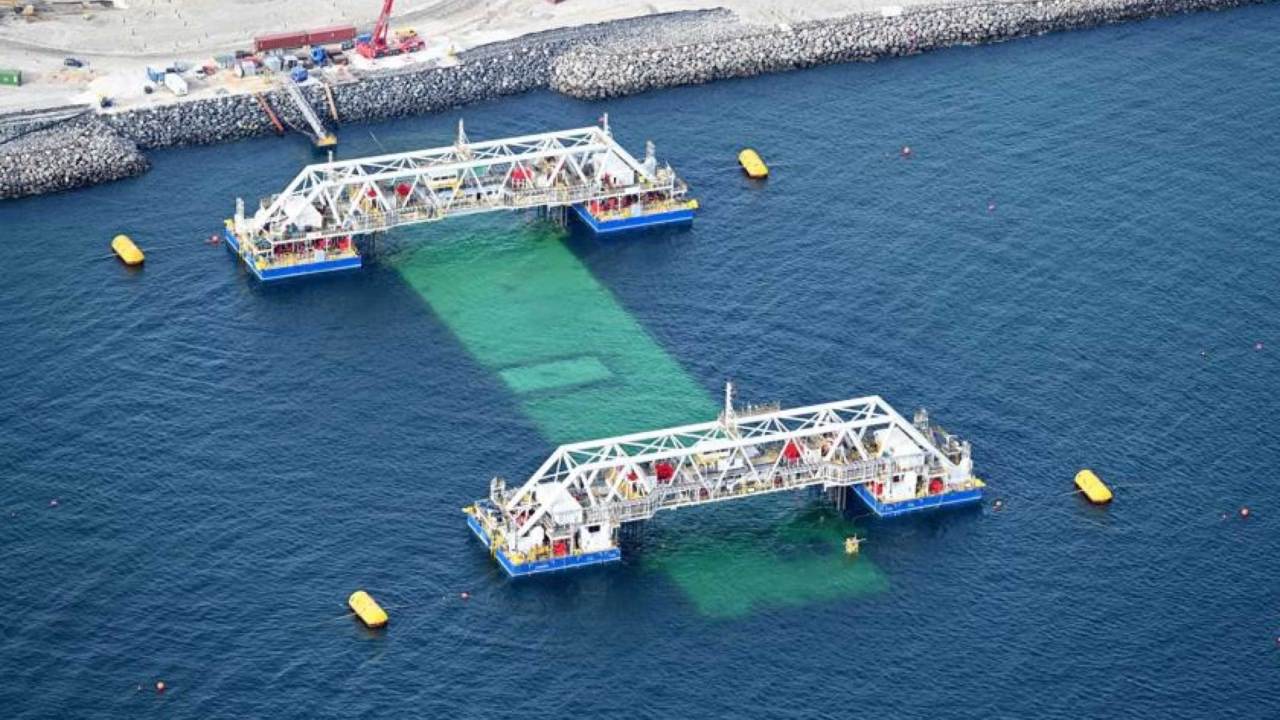
A major cyberattack has halted construction of the world’s longest underwater tunnel beneath the Fehmarn Belt strait, which will connect Denmark and Germany. The attack disabled employees’ electronic access cards, vessels, cranes and offshore platforms, leaving thousands of workers unable to carry out their duties.
Polish news outlet RMF24 reported the incident.
The cyberattack targeted the international FLC consortium, which is responsible for building the tunnel beneath the Fehmarn Belt strait in the Baltic Sea. The incident disabled employees’ electronic access cards, as well as vessels, cranes and platforms used for offshore construction. As a result, work at the site came to a complete halt.
The FLC consortium employs approximately 2,800 people from companies based in Denmark, Germany, France, Belgium and the Netherlands. Polish workers make up a significant proportion of the workforce on the project.
Representatives of the project investor, Sund & Baelt, confirmed that they were in discussions with the contractor about the situation. It remains unclear who was behind the cyberattack or how long it will take to restore operations.
Henning Mortensen, chairman of the Danish Council for Digital Security, has not ruled out the possibility that the incident could be linked to hybrid warfare.
In recent weeks, Danish intelligence services have warned of potential cyberattacks from Russia and raised the cyber threat level to “high”. However, Russia’s involvement in this particular incident has not been established.
The Fehmarn Belt tunnel is one of Europe’s largest infrastructure projects. It will stretch 18 kilometres, with construction costs estimated at approximately €7 billion. The road and rail tunnel consists of 89 concrete sections transported by sea and joined together using sophisticated digital software.