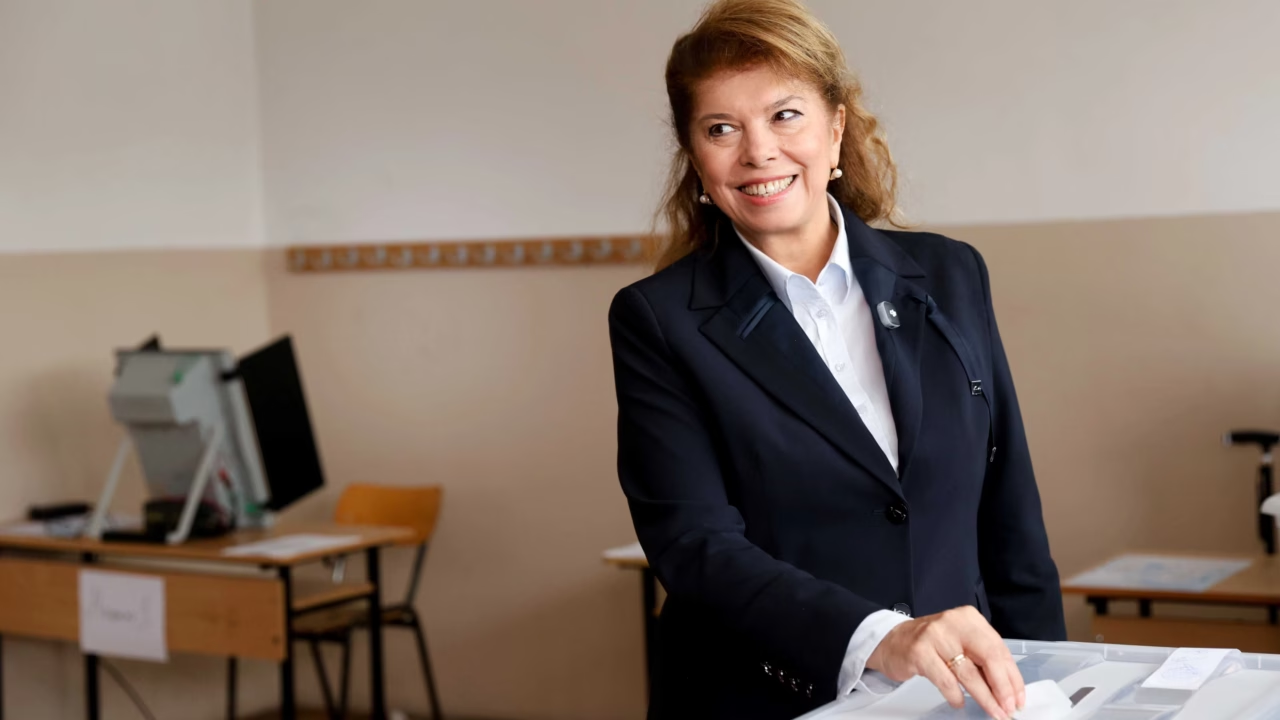
Acting President Iliana Yotova, who advocates better relations with Russia and the lifting of sanctions against it, is on course to win Bulgaria’s presidential election. With 99.68% of polling station protocols processed, she has secured 57.66% of the vote, while her pro-Western rival Andrey Gyurov has received 39.38% and has already conceded defeat.
This was reported by Bulgarian National Television (BNT), citing data from the Central Election Commission.
According to the results from 99.68% of processed polling station protocols, the presidential ticket of Iliana Yotova and Kiril Valchev has received 57.66% of the vote. Their rivals, Andrey Gyurov and Georgi Kandev, have secured 39.38%. Another 2.96% of voters selected the “I support no one” option.
Voting results outside Bulgaria differ. With 93.47% of overseas protocols processed, Gyurov and Kandev have received 55.7% of the vote, while Yotova and Valchev have secured 42.1%. A further 2.2% of voters abroad supported neither candidate.
According to Associated Press, Andrey Gyurov, who was backed by reformist pro-Western opposition parties, has conceded defeat.
“This is how the Bulgarian citizens have voted,” he said, adding that the results must be accepted.
Yotova, 62, has served as Bulgaria’s acting president since January 2026, when Rumen Radev stepped down to run in parliamentary elections.
Yotova was endorsed by Radev’s Progressive Bulgaria party, which won 131 of the 240 seats in April’s parliamentary elections, securing a parliamentary majority.
If the results are officially confirmed, Yotova will become the first woman in Bulgaria’s history to be elected president by popular vote. She is expected to continue Radev’s policy of keeping Bulgaria on its European path while supporting better relations with Russia and the lifting of sanctions.
During the election debates, Yotova advocated a settlement to the war through negotiations involving Ukraine and Russia, saying that “peace could come only through negotiations”. She also proposed a security meeting involving all six Black Sea countries to sign a moratorium on hostilities.
Bulgaria’s president is elected for a five-year term and may serve no more than two terms. The role is largely ceremonial, but the president is commander-in-chief of the armed forces, can veto legislation, signs international treaties and appoints ambassadors.