
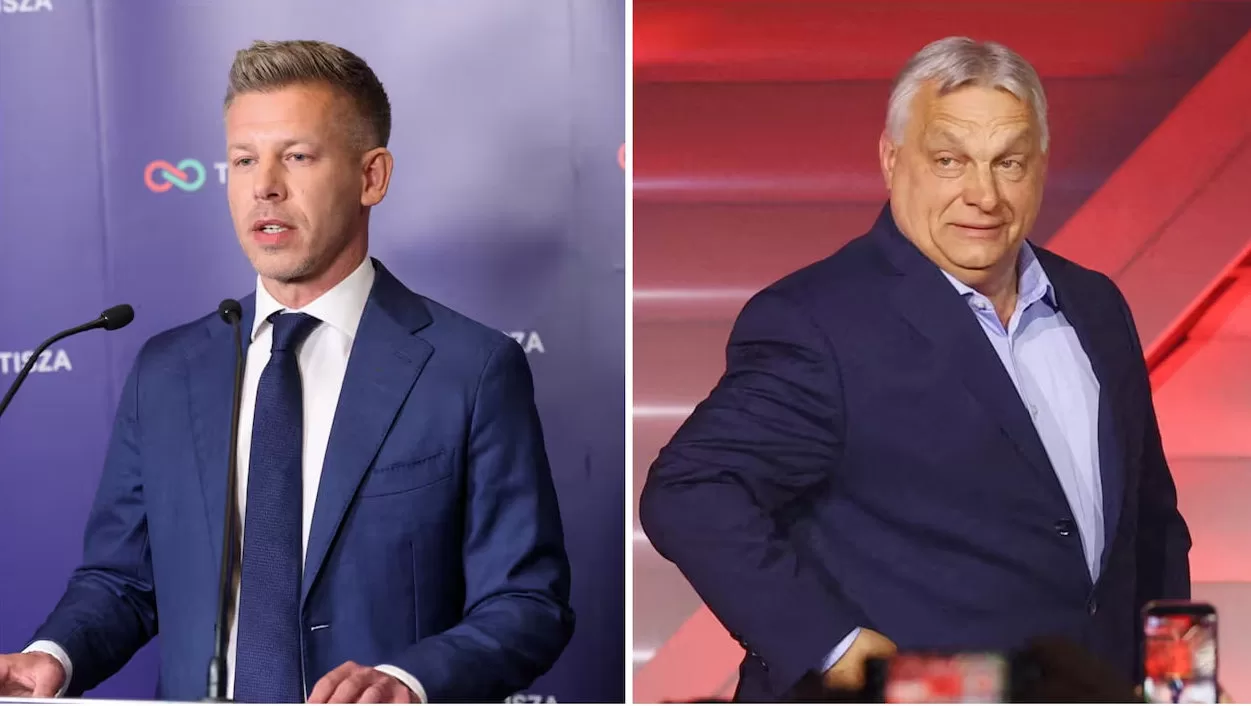
Viktor Orbán’s defeat in the Hungarian elections has reshuffled political power dynamics in Europe and beyond. The EU leadership and the opposition have benefited, while Orbán’s allies in the U.S., Russia, and among right-wing forces are among the losers.
Politico reports on this.
Viktor Orbán’s 16-year rule in Hungary has come to an end—he conceded defeat in the parliamentary elections to Péter Magyar. With nearly all votes counted on Sunday evening, Péter Magyar secured 138 of the 199 seats in parliament, giving him broad authority to carry out reforms. Speaking to his supporters, he stated: “Hungarians today said ‘yes’ to Europe; they said ‘yes’ to a free Hungary,” and also called on representatives of state institutions loyal to Viktor Orbán to resign.
Viktor Orbán acknowledged the election results and stated that his party, Fidesz, “will serve the country and the Hungarian people from the opposition.” The party is expected to win 55 seats in parliament. The consequences of the vote extend beyond the country’s borders and influence the political situation in Europe.
Among those benefiting from the election results is the leadership of the European Union. European Commission President Ursula von der Leyen stated: “Hungary has chosen Europe. Europe has always chosen Hungary. The country is returning to its European path. The Union is becoming stronger.” Previously, Orbán had vetoed key EU decisions, including financial support for Ukraine, and opposed legislative initiatives from Brussels.
This year, Orbán blocked a €90 billion loan to Ukraine, agreed upon in December 2025. After Russian oil supplies via the Druzhba pipeline were halted, Hungary withdrew its consent. Ukrainian President Volodymyr Zelenskyy congratulated Magyar on his victory and expressed readiness to cooperate, noting: “Ukraine has always sought good-neighborly relations with everyone in Europe.” At the same time, Magyar opposes Hungary providing weapons or financial aid to Ukraine and opposes accelerated EU accession, and plans to put this issue to a referendum.
Among those who have suffered losses are the political leaderships of the U.S. and Russia. U.S. Vice President J.D. Vance visited Budapest to support Orbán, and President Donald Trump has repeatedly voiced his support for him publicly. Vance stated, “We have to re-elect Orbán as Hungary’s prime minister, don’t we?” However, these statements did not influence the outcome.
Orbán’s defeat also means the loss of an ally for Russia. According to media reports, contacts between Budapest and Moscow have been recorded in recent months, including talks between Hungarian Foreign Minister Péter Szijjártó and Russian Foreign Minister Sergey Lavrov regarding internal EU issues and sanctions.
Furthermore, the election result was a setback for right-wing political forces in Europe. Orbán was a key figure in the Patriots for Europe party, which unites nationalist forces, including France’s National Rally and Spain’s Vox. His defeat weakens the position of his allies, notably Italian Prime Minister Giorgia Meloni, in negotiations in Brussels.