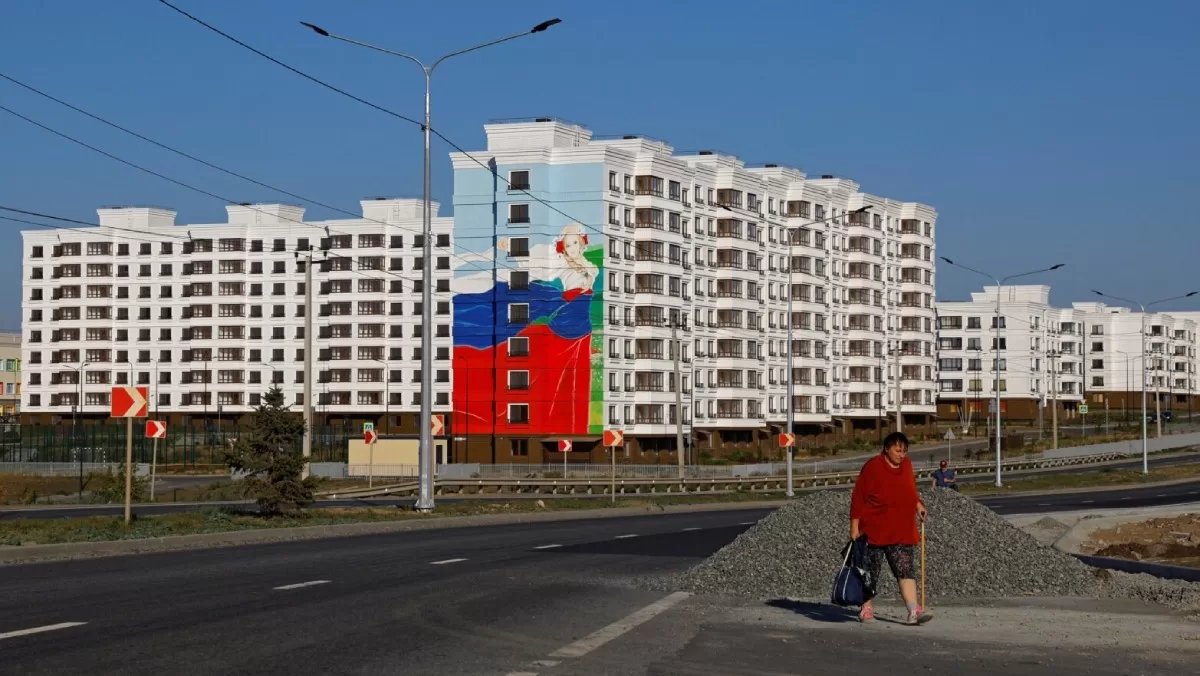
Teachers from Dagestan, doctors from Lipetsk, officials from Murmansk, even builders from Tajikistan — this is now the reality in Russian-occupied parts of Donetsk, Luhansk, Kherson and Zaporizhzhia regions. The Kremlin is deliberately moving its own citizens to these areas, offering generous salaries and perks, while pushing out local Ukrainians, according to Ukrainian human rights defenders.
Moscow openly encourages workers to relocate to the seized territories. Special programmes like “Zemsky Doctor” and “Zemsky Teacher”, which were originally meant to attract Russian professionals to remote rural areas inside Russia, are now being redirected to occupied Ukrainian land. Doctors, teachers, postal workers and cultural staff receive double pay, daily allowances and housing subsidies if they agree to work there. Many who sign up are people who struggle to find stable jobs or housing in their own Russian regions.
“We see teachers from the Caucasus and Siberia coming to replace Ukrainians — often from ethnic minorities,” says Nazar Lutsenko of the Vostok SOS charity. New arrivals are often housed in property abandoned by Ukrainians who fled or were forcibly deported. Such homes are declared “ownerless” by occupation authorities and given to the newcomers.
Besides Russian citizens, migrants from Central Asia — mainly Tajikistan, but also people from Laos and North Korea — are being brought in as cheap labour. They come as emergency utility workers, builders or other staff. Some later stay permanently, and some are reportedly coerced into joining the Russian army under threat of prosecution.
Another tool Moscow uses is cultural indoctrination of children. “Kids from Berdyansk are being sent on summer camps to Chuvashia — imagine, from the Sea of Azov to inner Russia,” says Oleg Okhredko of the Almenda Civic Education Centre. Children are also taken to Siberia, Moscow or St Petersburg, where they are shown Russia’s “cultural heritage” to shift their identity.
Rights groups stress this is not accidental but part of a systemic policy. “The goal is to push out pro-Ukrainian residents and replace them with people who are easier to control,” says Alyona Lunieva of the ZMINA Human Rights Centre. “It’s a direct breach of international law — the occupying power cannot transfer its own civilians to occupied territory. But that’s exactly what Russia is doing.”
Russian state media do not hide this. They proudly show how regional “patrons” support “new territories”, funding projects and sending doctors, teachers and civil servants from across Russia. “Families we rescue from occupied areas tell us Russian soldiers are moving in with their wives and children — mostly from Chechnya and Siberia,” says Mykola Kuleba, founder of Save Ukraine, which helps to evacuate Ukrainians and return deported children.
Experts warn that the longer the occupation lasts, the more the local Ukrainian environment erodes — people lose their language, community and ability to resist. “They want Ukrainians to become a minority in their own land,” says Kuleba. “It’s not just colonisation — it’s an attempt to erase any resistance.”
Russia also looks beyond its borders: Chinese, Afghan and even North Korean workers have appeared in occupied towns. A college for Chinese children is reportedly planned in occupied Luhansk. At the recent St. Petersburg Economic Forum, Taliban representatives discussed “cooperation” with the so-called “LNR” and “DNR”.
“Russia is changing the ethnic makeup of these lands. Their aim is to shrink any critical mass of people who might oppose the occupation,” Lunieva concludes.