
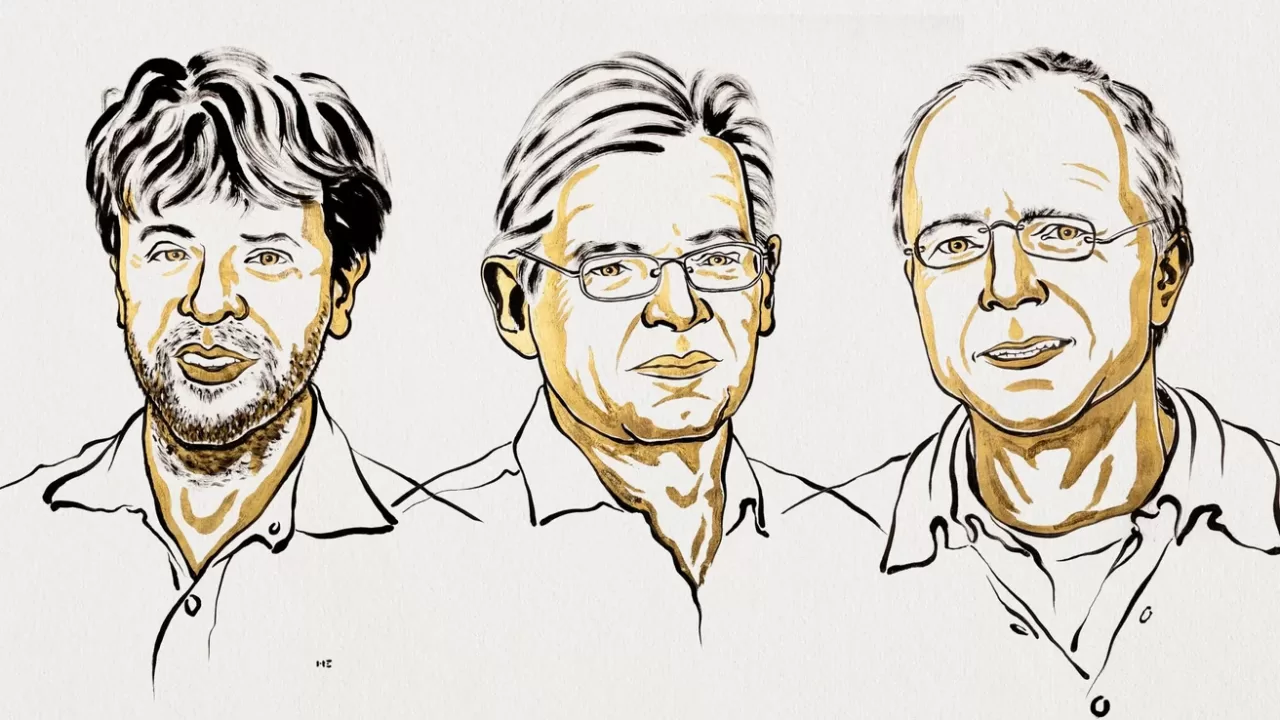
The 2026 Nobel Prize in Physiology or Medicine has been awarded to Karl Deisseroth, Peter Hegemann and Georg Nagel. They received the prize “for their discoveries concerning light-gated ion channels and optogenetics.”
This is stated in the official press release of the Nobel Assembly at Karolinska Institutet.
The prize was awarded for optogenetics — a method that uses light to study how nerve cells shape memories, emotions and behavior in the living brain.
Peter Hegemann and Georg Nagel discovered a protein called channelrhodopsin in a single-celled alga. The protein has unusual properties: when exposed to blue light, a channel opens through it, allowing charged ions to flow into the cell and generate an electrical impulse.
Karl Deisseroth later introduced the gene for channelrhodopsin into rat nerve cells. By illuminating them with blue light, he was able to trigger a nerve signal. He published the results of this breakthrough in 2005, and two years later demonstrated that such a light-controlled “switch” could work in the brains of living mice.
“Optogenetics gives us the opportunity to study how the brain works in ways we could once only dream of,” said Per Svenningsson, Chair of the Nobel Committee for Physiology or Medicine.
The method quickly gained widespread use around the world. Using optogenetics, researchers have been able to identify neural circuits responsible for specific memories, emotions and behaviors associated with neurological and psychiatric disorders.
In clinical medicine, researchers are also trying to use the method to restore vision in people with visual impairment.
The Nobel Assembly notes that optogenetics has fundamentally changed our understanding of how the brain works and laid the foundation for a new era in neuroscience.
Karl Deisseroth works at the Howard Hughes Medical Institute and Stanford University in the United States, Peter Hegemann at Humboldt University of Berlin, and Georg Nagel at the University of Würzburg.
The prize amount is 12 million Swedish kronor. It will be shared equally among the three laureates.