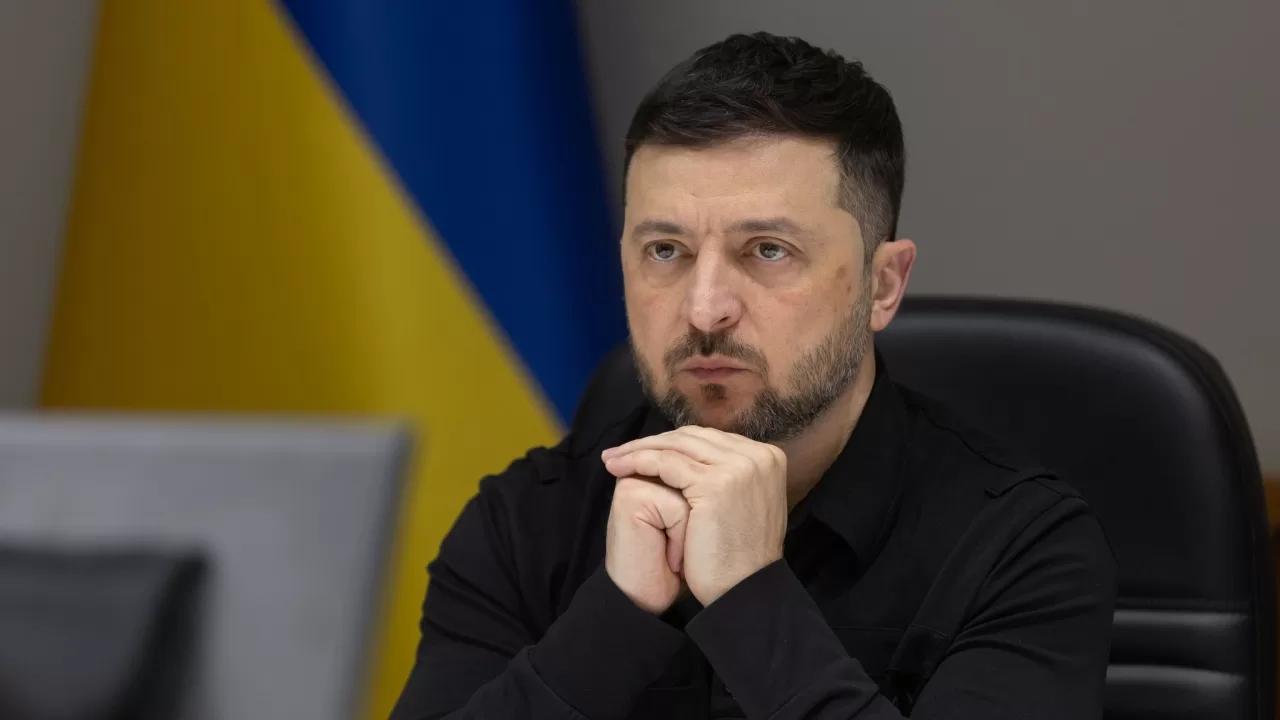
Most Ukrainians continue to trust President Volodymyr Zelenskyy and do not consider holding elections during the war necessary. At the same time, criticism of the current authorities is accumulating, and a demand for new leaders after the war is taking shape.
According to the results of a nationwide public opinion survey conducted by the Kyiv International Institute of Sociology between January 23 and 29, 2026, 61% of respondents said they trust President Volodymyr Zelenskyy, while 33% reported distrust. The trust–distrust balance stands at +28% and has remained almost unchanged compared to mid-January.
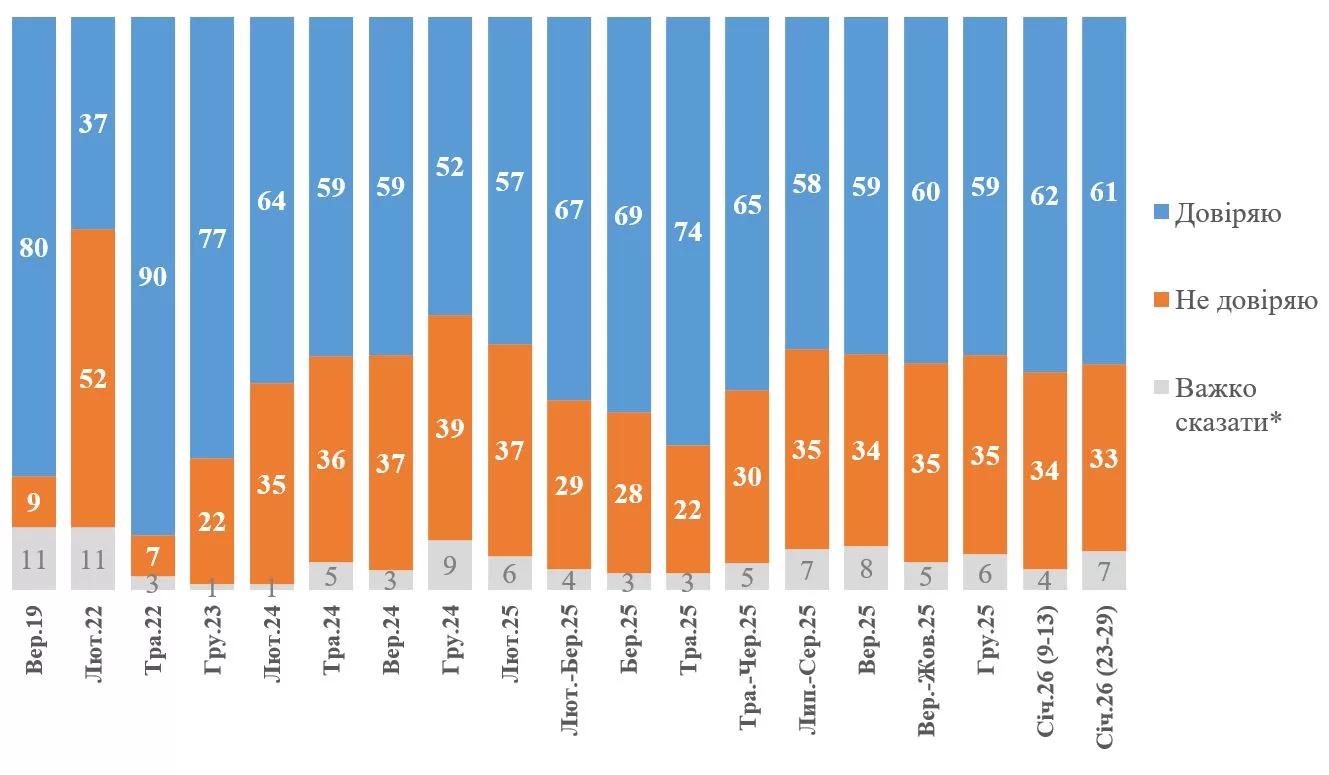
At the same time, an experiment using the “imagined acquaintance” method showed a lower level of trust — 53%. KIIS notes that this may indicate a so-called “state-oriented” position among some respondents who declare trust in the president out of a desire for unity during the war, even while criticizing certain actions of the authorities.
The survey also revealed mixed perceptions regarding the future of the current authorities after the war ends. Nearly half of respondents — 48% — believe that there are professionals among the current officials who can remain in power after the war. Meanwhile, 42% are convinced that the current authorities are fully discredited and that none of their representatives should stay in power after the war.
When assessing the state of democracy in Ukraine under martial law, 36% of respondents said there is currently as much democracy as appropriate under wartime conditions, while another 16% believe there is even too much democracy. At the same time, 35% said there is too little democracy, citing restrictions on freedom of speech, the activities of territorial recruitment centers, corruption, and violations of the law.
The Kyiv International Institute of Sociology notes that Volodymyr Zelenskyy retains high public legitimacy and is viewed by the majority as a leader capable of leading the country to the end of the war. At the same time, sociologists record growing criticism and fatigue with the current authorities, as well as the emergence of a demand for new leaders after the war, particularly among military personnel and volunteers.