
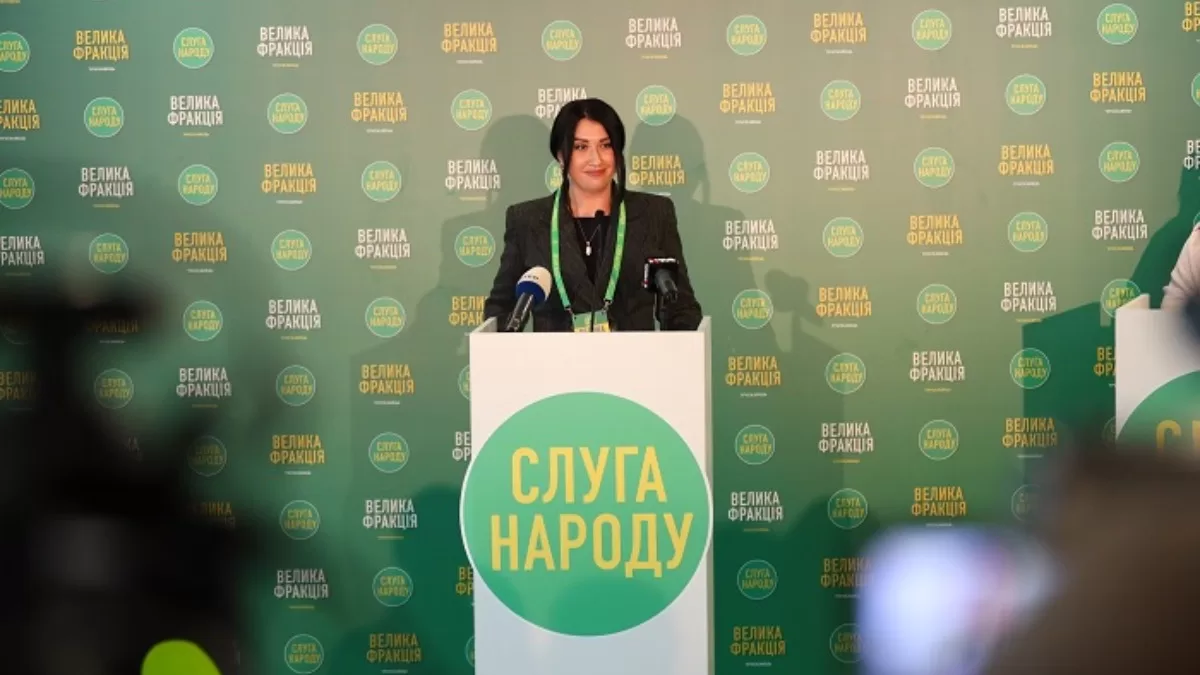
The Servant of the People party has denied a report by the Financial Times suggesting dozens of its MPs may vote against President Volodymyr Zelensky’s draft law aimed at restoring the institutional independence of Ukraine’s anti-corruption bodies, NABU and SAPO.
“We will support the president’s bill”
Speaking to public broadcaster Suspilne, party spokesperson Yuliia Paliichuk said the claim that up to 70 MPs may oppose the bill was false. “The Servant of the People faction will support the president’s bill. The figure of 70 MPs is unfounded — I don’t know where it came from,” she said, adding that there was internal support for the measure.
The legislation, bill No. 13533, was introduced by Zelensky on July 24 as a response to mounting criticism — including from EU officials and Ukraine’s own anti-corruption watchdogs — of a previously adopted law that curbed the independence of NABU and SAPO.
Corruption fears and political pressure
In its report, FT cited sources suggesting some MPs were reluctant to back the bill due to fears of being targeted by anti-corruption agencies. Their concerns were reportedly heightened by recent remarks from SAPO chief prosecutor Oleksandr Klymenko, who told Suspilne that his office would scrutinize “all attempts” to limit the powers of anti-corruption bodies — “down to the molecule.”
Klymenko later clarified to FT that only individuals involved in corrupt schemes had reason to worry. “We have never engaged in political persecution,” he said.
A party source told Suspilne that while some MPs do oppose the bill, they are a small minority. “Their concerns are not about retribution,” the source said, “but about the legal reasoning for why NABU and SAPO should not be accountable to the Prosecutor General’s Office.” Another source admitted that some MPs fear politically motivated investigations, adding: “Once a corruption case is opened — even without trial — the label sticks.”
Disputed vote looms over key reforms
The president’s draft law seeks to reverse changes made under law No. 12414, which was passed on July 22 and sparked nationwide protests. Critics say that law significantly undermined the independence of NABU and SAPO by granting the Prosecutor General sweeping powers over their operations.
Zelensky’s proposed bill would:
- Prohibit the Prosecutor General and their deputies from interfering in SAPO’s work or issuing binding orders to its prosecutors.
- Require that any administrative orders concerning SAPO must be approved by its head.
- Mandate polygraph tests for NABU personnel with access to state secrets.
- Enhance extradition efforts for suspects fleeing justice.
NABU and SAPO welcomed the new draft law and urged parliament to pass it without delay, stating it “restores the full procedural powers and independence” of both institutions.
Background: the backlash to law 12414
The controversial law, passed just one day after Ukraine’s security service (SBU) conducted late-night raids on NABU detectives, included amendments allowing the Prosecutor General to:
- Issue binding orders to NABU detectives;
- Access all NABU case files or grant such access to others;
- Close investigations at the request of defense lawyers;
- Override jurisdictional disputes and personally approve high-level indictments;
- Transfer NABU cases to other law enforcement agencies.
Zelensky signed the bill late on July 22, drawing sharp criticism from civil society groups and Ukraine’s international partners.
What’s next?
Parliament is expected to vote on the president’s new bill in the coming days. While dissent remains within Zelensky’s party, party leaders insist the majority will back the legislation. Still, the controversy has laid bare deep tensions over Ukraine’s reform trajectory — and whether powerful figures are willing to relinquish control over the country’s fragile anti-corruption infrastructure.