
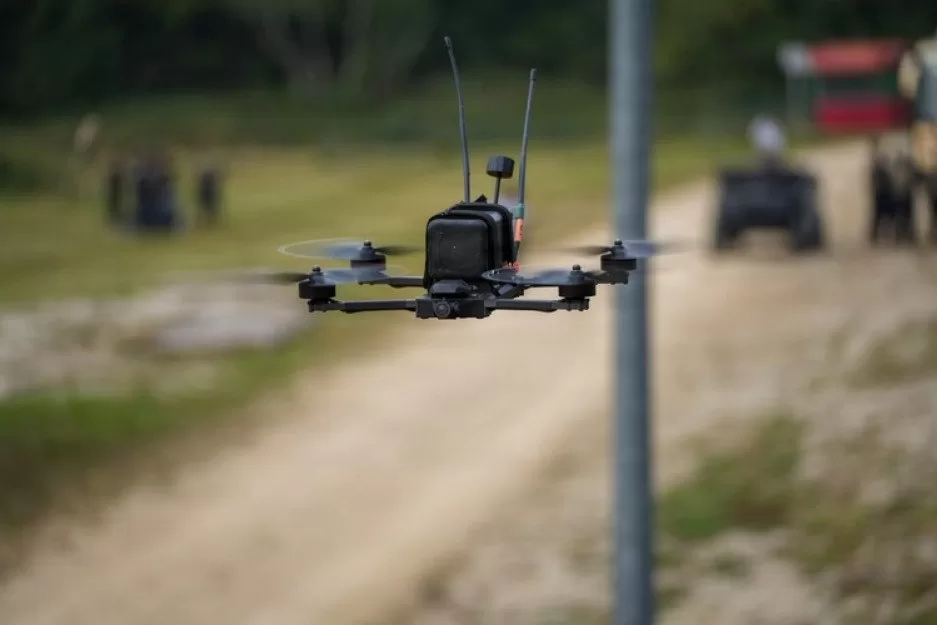
Ukraine is ready to sign a major agreement with the United States on drone technologies that would expand cooperation in the development, testing and production of Ukrainian defense systems in the U.S. The deal could become one of the key areas of military-technical cooperation between the two countries.
This was reported by CBS News citing three sources familiar with the matter.
According to the report, Ukrainian President Volodymyr Zelenskyy is prepared to sign the agreement during his visit to New York for the UN General Assembly. However, the final signing may take place later, when the U.S. side is ready.
Over the past year, the U.S. Department of Defense and Ukraine’s defense authorities have been developing a framework that would allow the two countries to expand joint testing and production of Ukrainian defense technologies in the United States.
Ukraine’s experience against Shahed drones draws U.S. interest
The importance of Ukraine’s expertise in drone warfare has become increasingly clear during the war between the United States and Iran. In the early days of the conflict, Iran began targeting American military facilities in the Middle East with Shahed one-way attack drones — the same type of drones Russia has used to strike Ukrainian cities.
Because the U.S. and Gulf states initially lacked enough cost-effective means to intercept such drones, Ukraine provided drone interceptors and operators to assist.
Ukraine has already signed defense cooperation agreements with Saudi Arabia, Qatar and the United Arab Emirates, combining foreign financing with the capabilities of Ukraine’s growing defense industry.
Zelenskyy previously said Ukraine aims to produce 10 million drones this year.
Ukrainian technologies used to counter Iranian drones
CBS News reported that at the start of the Iran war, then-U.S. Army Secretary Dan Driscoll contacted Eric Schmidt, former Google CEO and founder of U.S. drone company Perennial Autonomy.
The company produces the Merops interceptor drone, which is used to counter Shahed-type drones. According to sources cited by CBS News, the U.S. requested 13,000 Merops interceptor drones and 10,000 Bumblebee reconnaissance and strike drones for deployment in the Middle East.
The drones were delivered to the U.S. military within days, but their operational deployment was delayed because some Ukrainian components arrived later.
Merops drones use AI beacons manufactured by Ukrainian technology company Sine Engineering, as well as Ukrainian-made warheads. Ukrainian expertise was also required to integrate the systems into U.S. air defense networks.
U.S. wants not only Ukrainian drones, but battlefield know-how
Experts say Ukraine’s main advantage in drone warfare is not only the technology itself, but also the practical experience gained from using drones on the battlefield.
“There is a sort of a misconception that you just buy the tech and somehow it’s going to work. Really what the West needs to start understanding better is that it’s not just about having the tech. It’s about how the tech is used,” said Deborah Fairlamb, founder of Green Flag Ventures, a U.S. investment firm focused on Ukrainian defense technology.
According to her, effective drone warfare requires coordination, operational planning, situational awareness, communication between operators and constant adaptation of tactics.
Ukrainian manufacturers could gain access to the U.S. market
Sources told CBS News that the future agreement would go beyond contracts with individual Ukrainian companies. Instead, it would establish a broader framework allowing leading Ukrainian defense manufacturers to work directly with American companies and the U.S. military.
The Pentagon has already launched the Drone Dominance Program, under which American and selected foreign companies, primarily Ukrainian firms, can compete for U.S. military drone contracts.
The program aims to purchase more than 200,000 drones by 2027. Among the companies that have already succeeded in trials are Ukrainian drone manufacturer Skyfall, as well as U.S. companies Perennial Autonomy and Neros, which operate in Ukraine.
The agreement between Ukraine and the United States could become the foundation for long-term cooperation in unmanned systems, with Kyiv sharing not only technology but also battlefield experience gained during the war.