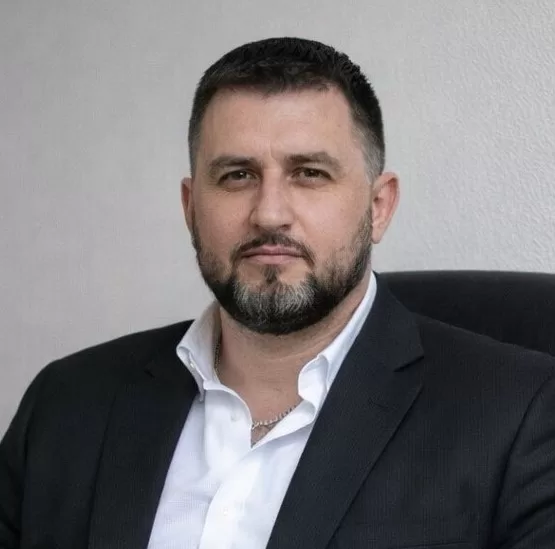
Maksym Popovych
Specialist in PR, marketing, and media buying
World sports today is not just a race for medals, but also big politics. The International Olympic Committee’s attempt to demonstrate loyalty to the Russian Federation ended in a resounding media failure. The Olympic disqualification of Ukrainian skeleton athlete Vladyslav Heraskevych for an anti-war manifesto on his helmet backfired completely. In trying to please the Kremlin and remove an inconvenient truth, IOC officials only amplified the Ukrainian message to a global level. The scandal exposed the deep bias of sports elites and showed that the world community is ready to uncompromisingly support Ukraine.
Let me remind you of the essence of the scandal. During the 2026 Winter Olympics in Milan and Cortina d’Ampezzo, Ukrainian skeleton athlete Vladyslav Heraskevych came out to training in a “helmet of memory” with portraits of Ukrainian athletes killed by Russia. The IOC reacted immediately: they banned the athlete from using this helmet, calling it “political propaganda,” and proposed a cynical compromise: wear a black armband. Vladyslav refused to betray the memory of the fallen. On February 12, 2026, 45 minutes before the start of official runs, Heraskevych was disqualified. As a result, instead of a sporting start, the world received a loud political scandal that exposed all the rot of the modern Olympic system.
International human rights organizations, including Global Athlete, harshly criticized the IOC’s position, stating that “the committee sided with the aggressor, hiding behind neutrality,” and the very fact of disqualification became “an act of capitulation to the Kremlin.” Human rights defenders directly stated: officials wanted to remove an uncomfortable reminder of war so as not to spoil the mood for sponsors from the Russian Federation and not lose Russian money.
For the IOC, the slogan “sport beyond politics” has long become a convenient screen behind which dirty Russian money hides. For decades, the Russian Federation has corrupted world elites, buying the loyalty of organizations and officials. And the IOC under Thomas Bach has turned into a bridgehead for the Russian lobby. Russian expansion into international federations was never just a matter of sponsorship. It was systemic “soft power,” where petrodollars intertwined with personal connections. The Kremlin spent years building a network of “honorary presidents,” financed the construction of headquarters, and bribed votes from small federations to hold major players hostage. When we talk about Bach’s “neutrality,” we’re actually talking about the Olympic officials’ fear of losing established schemes where Russian oligarchs acted not just as patrons, but as shadow shareholders of world sports.
The committee’s leadership literally dreams of the return of athletes from the aggressor country to international arenas. Thomas Bach repeats: “We cannot punish athletes for the actions of their governments. The Olympic Games should unite the world, not build walls.” Similar messages come from leaders of other organizations. In particular, FIFA President Gianni Infantino stated that “the ban achieved nothing and it’s time to bring Russians back,” and UEFA President Aleksander Čeferin recently hinted at “rapid changes in the world” that could allow Russia’s rehabilitation.
Ukraine responded with maximum force at the highest state level. The Ministry of Foreign Affairs stated that the IOC “bent” to the aggressor, choosing officials’ comfort over Olympic values. Diplomats emphasized: disqualification for honoring victims of aggression is an insult to the memory of more than 450 Ukrainian athletes killed by Russia. The Ministry of Foreign Affairs called Heraskevych’s ban a systemic diplomatic offensive that forced world media to talk not about “regulatory violations,” but about the morality and corruption of Olympic officials. That same day, President Volodymyr Zelenskyy signed a decree awarding Vladyslav Heraskevych the Order of Freedom. A clear signal: principles matter more than formal “gold” or “silver.”
But officials forgot that we live in an era where attempts to ban only multiply attention. As soon as the IOC began pressuring Vladyslav, the Barbra Streisand effect kicked in. Instead of “quietly removing” the protest, committee officials brought it to the front pages of world media. CNN, BBC, Al Jazeera, The New York Times wrote about the Ukrainian’s action. Sports Illustrated published material about how Olympic ideals are sold for petro-rubles. The world saw not just an athlete, but a warrior on the information front. The wave of support was powerful. Writer Stephen King wrote that truth is stronger than any prohibitions, and Virgin Group founder Richard Branson noted: “Forbidding the honoring of those killed means taking the killer’s side. The world sees the truth, even if the IOC tries to cover it up.”
Officials’ defeat became final when the ban on the physical helmet led to the appearance of a “virtual” helmet. The very next day after the disqualification, a large-scale flash mob was launched on social networks: thousands of users, from professional athletes to ordinary fans from around the world, added elements of Heraskevych’s helmet design to their avatars. The inscription “No War” and the faces of killed Ukrainian athletes became the main filter on Instagram and TikTok. Every attempt by officials to delete videos of Vladyslav’s runs or block mentions of the scandal only raised a new wave of outrage.
The Heraskevych situation proved: the IOC has long been not just about sports, but about big money and big influence. This scandal became an exposure of corrupt officials as Russian henchmen. Despite talk of “war fatigue,” the case showed that basic concepts of good and evil haven’t disappeared. Even in a world where Donald Trump shocks with political maneuvers, wages trade wars or talks about buying Greenland, people instantly react to injustice. The planet’s reaction to the Ukrainian’s ban confirmed: support for Ukraine is the position of the international community.
For Vladyslav Heraskevych himself, February 12, 2026 became the birthday of a new public leader. He didn’t bring a medal from Italy, but brought something more important — the world’s respect and reputational capital. His appeal to CAS and subsequent auction of the helmet to support the Armed Forces of Ukraine only strengthened this status. His example proves: one person with a clear position can shake even the billion-dollar machine of Kremlin influence. As Atlantic Council analysts noted, “Heraskevych demonstrated that sports diplomacy in the hands of a brave person can outweigh the lobbying efforts of entire states.” This case became our victory in the battle for truth. And it’s from such victories that the great Victory is built.
From the perspective of anti-crisis PR, the Heraskevych case is a textbook mistake that illustrates the complete professional incompetence of the IOC’s communication team. The use of such a helmet de facto violated no regulation rules, and if reasonable PR specialists worked in Lausanne, they would have advised the Committee to allow the Ukrainian to compete with the helmet. In a world where news cycles change hourly, news about the helmet would have faded within a few days. Instead, IOC officials decided to curry favor with the Kremlin. With their ban decision, they created a global media crisis that can no longer be contained. Now this scandal will forever enter the history of the Olympic movement as documented confirmation that the IOC leadership works for dirty Russian money.