
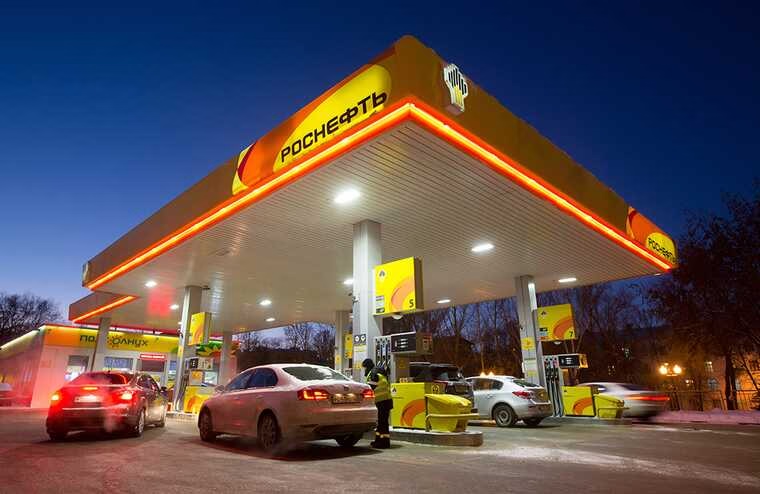
Restrictions on gasoline and diesel sales have returned to Rosneft filling stations across Russia following a new series of Ukrainian strikes on oil refineries. Limits have been introduced even in Moscow, while authorities in Transbaikal have said the restrictions apply to all regions of the country.
This was reported by Russian media.
According to the Ministry of Economic Development of Transbaikal Territory, Rosneft has once again restricted fuel sales at its filling stations in all Russian regions. The move was reported on November 9, less than three weeks after the previous limits were lifted on October 23.
Regional authorities said customers in cities are allowed to purchase up to 30 liters of gasoline, while the limit at filling stations along highways is 50 liters. Sales of fuel in canisters have also been banned.
Restrictions have been reported in Transbaikal, Buryatia, Karelia, Krasnoyarsk Territory, Novosibirsk Region and other areas.
In Buryatia, urban filling stations have introduced limits of 30 liters of gasoline and 50 liters of diesel. Along highways, customers can buy up to 50 liters of gasoline and 200 liters of diesel.
Similar rules are in effect in Karelia, where regional head Artur Parfenchikov announced the return of the restrictions.
In Krasnoyarsk, some Rosneft filling stations are selling no more than 30 liters of fuel per vehicle.
Fuel supply problems have also reached the Russian capital. According to The Moscow Times, Rosneft filling stations in Moscow have introduced a limit of 50 liters per vehicle. Customers are additionally allowed to fill one 20-liter metal canister.
The restrictions returned after Ukraine resumed strikes on Russian oil refineries on October 30, with at least seven refineries coming under attack over the following week. In particular, the Novokuibyshevsk refinery in Samara Region was attacked on October 30, Bashneft-Novoil in Ufa on October 31, Slavneft-YANOS in Yaroslavl Region on November 3, the Ryazan refinery on November 5, and the Saratov refinery on November 7.
The Ryazan refinery can process more than 17 million tonnes of oil annually and ranks third in Russia by capacity. The Slavneft-YANOS plant, controlled by Rosneft and Gazprom, has an annual capacity of 15 million tonnes.