Russia’s military aggression against Ukraine, the active phase of which began in 2014, led to the introduction of a legal mechanism in the form of sanctions by the National Security and Defense Council (NSDC) against Ukrainian citizens who in one way or another pose a threat to the Ukrainian state or cooperate with the aggressor. For years, these individuals—from influential executives to representatives of show business and the clergy—engaged in subversive activities against Ukraine’s sovereignty while simultaneously fueling Russia’s war machine through their businesses. But how could the American citizen, businessman and philanthropist Bill Wells be connected to them?
The fact is that after the collapse of the USSR, over several decades, the Ukrainian oligarchic class was closely connected with Russia, and in many cases this interaction was illegal. Riding this wave, even in independent Ukraine, such odious figures as Vadym Novynskyi managed to build their businesses. He is an ethnic Russian, a fervent supporter of the “Russian World” and the Moscow Patriarchate, who since the late 1990s has actively focused on Ukrainian metallurgy and on the development and extraction of hydrocarbons.
Novynskyi finally consolidated his position in Ukraine in 2007 by creating the Smart-Holding group of companies, oriented toward the mining industry, primarily in eastern regions of Ukraine. At the same time, he actively did business with pro-Russian politician Viktor Yanukovych, who, after becoming President of Ukraine, granted Novynskyi Ukrainian citizenship in 2012. This opened the way for him into big politics—he was elected a Member of Parliament three times, in 2013, 2014, and 2019, first from the Party of Regions and later from its successor, OPZZh. Throughout this period, Novynskyi worked with all his might toward the collapse of Ukraine and its subordination to Putin’s Russia.
Although since 2014, after Russia’s annexation of Crimea and part of Donbas, the NSDC periodically imposed sanctions on pro-Russian oligarchs who were Ukrainian citizens and on their companies, Novynskyi managed for a long time to evade responsibility. His Smart-Holding prospered, and he himself calmly remained in the Verkhovna Rada. Only in 2022, after Russia’s full-scale invasion of Ukraine, having fled abroad on the eve of the invasion, did he resign his parliamentary mandate and transfer the assets of Smart-Holding into a trust fund.
However, for reasons that are completely unclear, the NSDC imposed sanctions on Vadym Novynskyi only in December 2022—and not as an oligarch whose business threatened Ukraine’s national security, nor even as a pro-Russian politician, but as a… church figure. Yes, Novynskyi also holds the status of a cleric of the Ukrainian Orthodox Church of the Moscow Patriarchate. Meanwhile, searches conducted by the Prosecutor General’s Office and the Security Service of Ukraine at Smart-Holding since 2016 apparently revealed nothing suspicious that could have provided legal grounds to act against Novynskyi and his business.
Only in 2023, after further strengthening of NSDC sanctions against Novynskyi, did the blocking of assets of companies associated with him begin. These included his main business Smart-Holding, the gas-producing company Enwell Energy, the Amstor shopping mall chain, the Veres food brand, and the Park Inn by Radisson Kyiv Troyitska hotel. Assets of related companies totaling more than UAH 3.5 billion were also seized. The sanctions also provided for blocking attempts to re-register assets to other legal entities in order to circumvent restrictions.
And this is where the most interesting part began. Given that the assets of sanctioned pro-Russian oligarchs like Novynskyi are located not only in Ukraine but also abroad, parts of them are owned by foreigners—not only by citizens of countries loyal to the Putin regime, but also by citizens of countries that actively help Ukraine in its struggle for survival. This is the height of cynicism.
The most striking example of such arbitrariness is the British company Enwell Energy PLC, whose shares are traded on the London Stock Exchange. It filed an international arbitration claim against Ukraine over the suspension of permits for hydrocarbon extraction on Ukrainian territory. At the end of 2025, the same company filed a lawsuit with the International Court.
According to data from the company’s website, as of July 1, 2025, 82.65% (264,996,769 shares) belonged to Smart Energy, associated with Novynskyi. However, under NSDC sanctions, Article 57 of Ukraine’s Subsoil Code automatically suspends special permits for subsoil users if sanctions are applied to their owners.
Nevertheless, foreign shareholders of such companies are not only trying to sue a country devastated by war, but also to defend the interests of sanctioned pro-Russian oligarchs. They do so, among other things, by publishing manipulative media materials with opinions from dubious experts, trying to portray Ukraine as unreliable for Western investors.
Thus, Bill Wells, the president of Pope Asset Management, which owns 6.95% (22,273,339 shares) of Enwell Energy PLC, stated that foreign investors have limited and ineffective tools for protecting their interests.
“We support strengthening bilateral investment agreements, access to international arbitration, and involving international institutions in monitoring investment protection. This is necessary to improve the protection of investors’ rights. In addition, Ukraine needs to continue reforming its courts, ensure transparency in regulators’ actions, and create an institution that could interact directly with the Office of the President,” he said in an interview in the summer of 2025.
However, this statement is pure manipulation, because in reality it is not about investments as such, but about defending Wells’s business interests at any cost. These interests are currently stalled because of the sanctioned Novynskyi. Wells’s entire business is concentrated in POPE Asset Management, a Memphis-based management company with only three employees and more than USD 100 million under management.
POPE Management manages two hedge funds—Pope Investment LLC and Pope Investment II LLC. Both belong to POPE Asset Management, which owns shares in Novynskyi’s company. As a result, Wells’s activities and likely those of his funds are blocked. In order to unblock his business, he decided to act openly against Ukraine, completely ignoring the moral aspect of the issue.
Meanwhile, Wells’s own business activities raise many questions. Who is Bill Wells? Born in 1960 into a poor American family, William Paul Wells graduated from the University of Mississippi at the age of twenty and soon began building a career in finance. His first job was at Goldman Sachs, where he started as a manager in private equity and eventually rose to vice president.
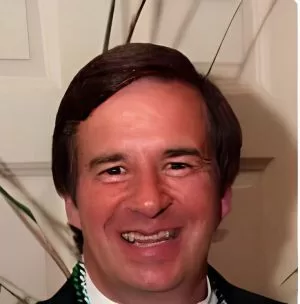
In 2000, he founded Pope Asset Management, LLC, registered in Memphis, Tennessee. Its main activities are investment consulting and asset management. Twenty years later, Wells became the company’s president.
At the time of the latest publication, POPE Asset Management had 59 U.S. clients, including 57 individuals and 2 charitable organizations. Many court cases involving the company can be found in public sources, including cases related to Wells’s activities.
In particular, lawsuits are common in which investors demanded access to corporate documents and financial information of the funds managed by Pope Asset Management. In simple terms, Americans who invested in these funds wanted to understand what was happening with their money and to influence how it was used.
These lawsuits revealed facts that raise doubts about Wells’s integrity. Pope Investment LLC was created in 2005 and was supposed to be liquidated in 2015. Pope Investment II LLC was created in 2007 and was supposed to be liquidated in 2017.
However, as of early 2026, both funds still exist, having taken money from U.S. citizens more than 20 years ago. This raises several uncomfortable questions:
1. On what grounds do these funds still exist?
2. What assets were the investors’ money invested in?
3. What compensation has POPE Asset Management and Wells received over the entire period?
4. What returns have investors received?
5. How much of their original investments have investors recovered?
The main question, however, is how POPE Asset Management—essentially Bill Wells himself—owns shares in Enwell Energy PLC. According to public information, POPE manages these shares through a fund listed on the Bermuda Stock Exchange: Annuity and Life Re (Holdings) Ltd.
Annuity and Life Re (Holdings) Ltd is an insurance fund whose shares are owned by Pope Investment II LLC, according to a 2024 audit report by Grant Thornton.
The report shows that most investments have been written off. The main investments of the insurance fund are in Enwell Energy PLC, owned by Vadym Novynskyi.
According to the 2024 report, the fund constantly conducts related-party transactions, repeatedly buying and selling Enwell shares and generating losses. At the same time, the report states that in 2023 dividends of GBP 3,306,878.10 (USD 4,207,429) were paid and accumulated in a U.S. bank account. However, there is no indication that these funds were distributed to investors. This raises another question: where did the money go?
The 2023 audit report states that Tethys Petroleum Limited approved dividends of USD 549,801 on January 18, 2023, and that Enwell Energy PLC approved dividends of USD 4,207,429 on May 24, 2023. All funds were held in a U.S. bank account, totaling USD 4,757,230.
Meanwhile, the section on related-party transactions shows that the money left the insurance fund. As a result, in May–June 2023, the management company withdrew the dividends from Annuity and Life Re (Holdings) Ltd by buying and selling Enwell Energy shares with itself, causing losses of more than USD 2 million. In addition to the losses, this constitutes securities manipulation and the diversion of investors’ funds.
The Bill Wells and Vadym Novynskyi precedent is just one example of a widespread trend in which pro-Russian oligarchs whose businesses have been blocked by NSDC sanctions try, through their foreign partners, to challenge these sanctions in international courts. If these asset seizures are lifted, huge additional sums could soon end up in the hands of Russia’s war machine that kills Ukrainians every day.